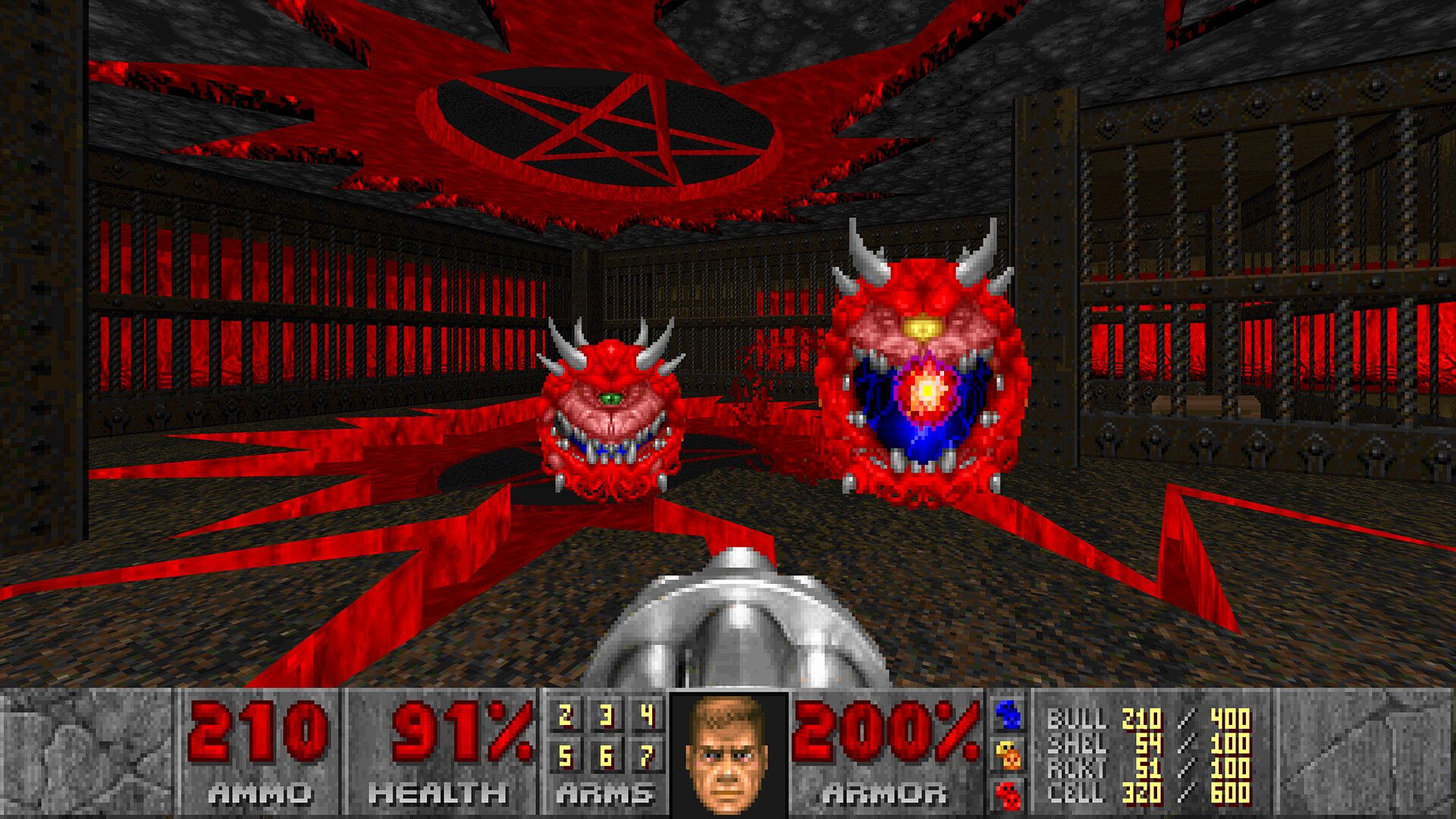
In the early 2000's, the perennial question was whether a powerful system could run Crysis. These days, it's whether a minimal one can run Doom. We've seen an affirmative answer to this question when it comes to vapes, a motherboard BIOS, and even a pregnancy test. And now? A DNS database.
To be clear, we've seen Doom broken down into DNS text records before, but this time it seems like the database is doing more than file storage. This new version is courtesy of Corey Quinn over at The Register, who explains: "I have compiled Doom for a 32-bit machine whose arithmetic and memory live in DNS."
DNS, for those unaware, means 'domain name system', and is the system that translates URLs into IP addresses that computers can actually interact with to visit. You can also create your own DNS databases with your own entries.
Quinn realised that such a database could be used essentially as a "librarian", pulling pre-made answers to relevant operations: "The database itself is 6.4 million rows of truth tables."
One of the main pioneers of DNS, Paul Vixie, said: "I can't decide whether this is deliciously horrible, or else horribly delicious. in either case, it's the best use of RFC 2136 DNS UPDATE that I've ever seen."
DNS UPDATE is what allows DNS records to be changed, which is also what's required for values and variables to change and be updated in a game world. That's the key trick here, as far as I can tell: Quinn realised there's enough similarity in the way DNS works to essentially replicate the usual conditional 'if this, then this' way that code works.
Source link