
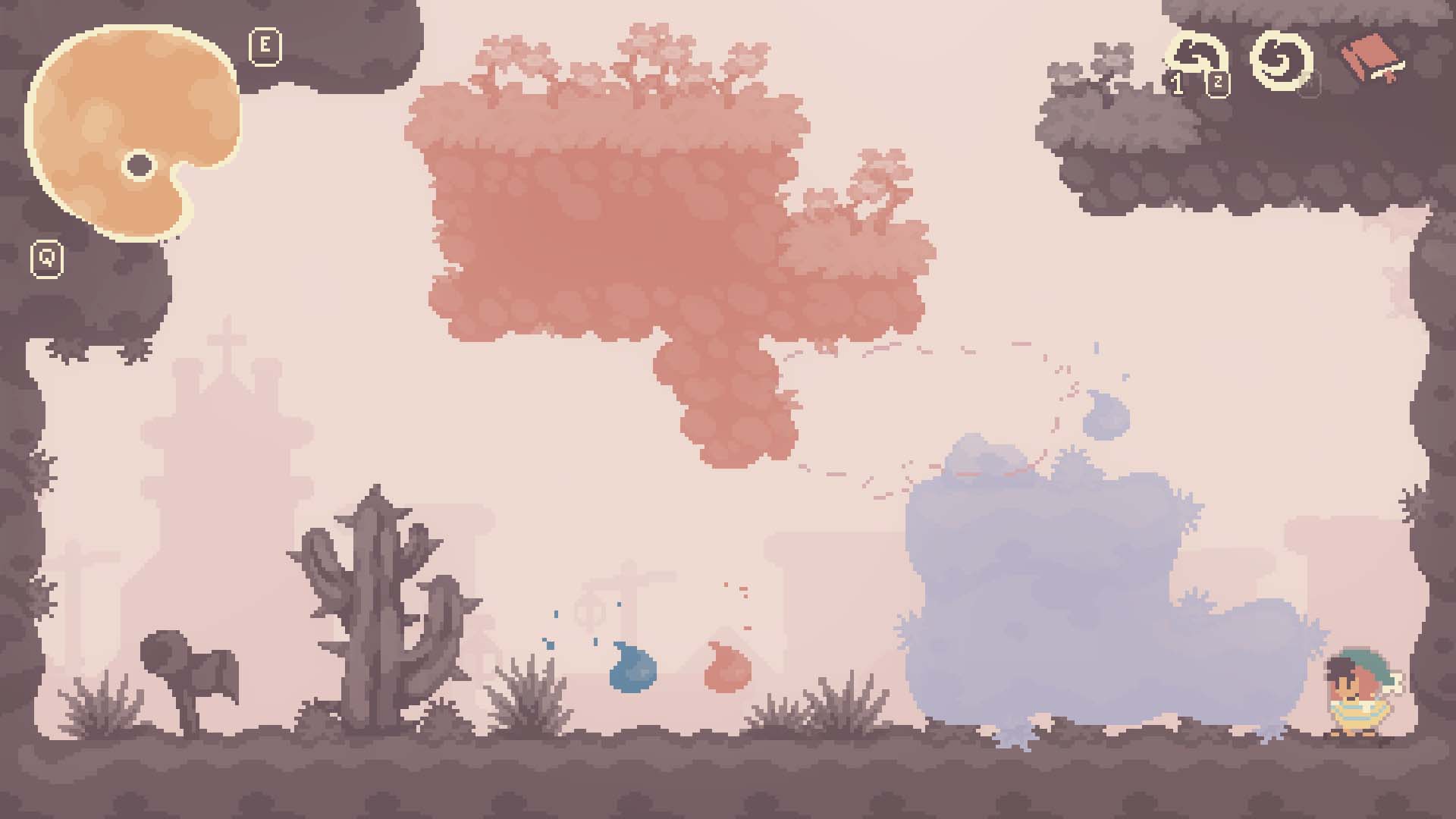
Colorbound is a puzzle-platformer in which you play as Anku, a boy who lives in the mountains of Chile with his grandmother. His grandfather, Eloy, has passed away, and Anku and his grandmother remember the color Eloy brought to their lives through his music. Panpipe Studio turns this idea into reality, using color and music to amplify its story of love, loss, and family.
The game began as a concept created for the Latin American Games Showcase Game Jam in 2025, inspired by the theme, “What the eyes don’t see, the heart doesn’t feel.” Players see this idea echoed almost immediately in the hints offered throughout the game: “If you can’t see it, it can’t affect you.” What started as an exploration of light and shadow developed into a pastel-hued platforming adventure. But color extends beyond Colorbound’s mechanics—it becomes a representation of Andean culture, the culture that the game’s developer, Isaías Arrué, wanted to celebrate.
While the name of the game is Colorbound, music forms a vital part of its identity as well. The panpipe (la zampoña, as it’s called in the game) is the item Anku collects to begin his journey, and it’s also the object that sparks the reunion at the heart of the story. It’s a well-known instrument in Andean folk music, making la zampoña the perfect connection between the game’s use of color and its music. Together, the two create much of the magic of Colorbound.
Anku’s story is ultimately one of joy, even as it explores themes of loss, and the developer evokes that sense of joy through color and music alike.
Source link