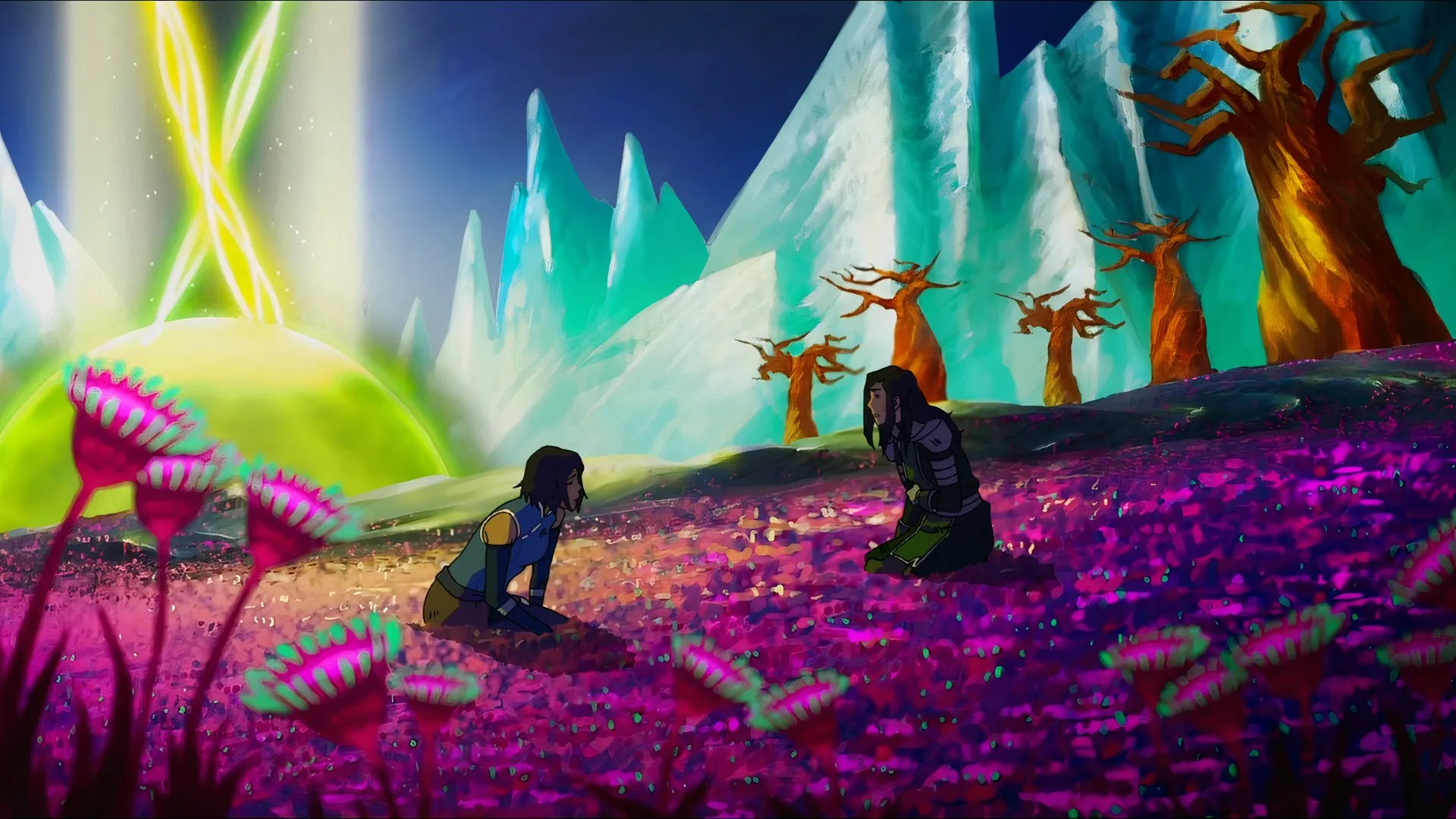
Every Avatar inherits the problems of their predecessor. That’s not altogether surprising, since each Avatar spends their life wielding all four elements to bring peace to the world and shaping it according to their own unique vision, then dying… only to be reincarnated into somebody else.
Wan, the original Avatar, established the spiritual status quo that would last for the next 10,000 years. After Wan permanently fused with Raava, the spirit of light, he imprisoned the spirit of darkness, Vaatu, within the Tree of Time. He then closed the spirit portals at the North and South Poles, separating humans and spirits, and assumed responsibility for serving as the bridge between their worlds. He died with humanity still at war with itself, and we don’t know how many incarnations it took to bring peace.
In The Last Airbender, we also see this dynamic play out between Avatar Roku and Aang. Roku’s failure to stop Fire Lord Sozin enabled the Hundred Year War, which Aang eventually ended. Aang, in turn, helped establish Republic City as a multicultural experiment, leaving Korra to contend with its political instability and rapid technological growth.
Perhaps the biggest mystery in Paramount’s new Avatar: Seven Havens series concerns what Korra left behind. More than two centuries after the events of The Legend of Korra , the world has been devastated by the Cataclysm, and the surviving pockets of civilization all remember Korra as the great destroyer who caused it. But did she really destroy the world because of something she did?
Source link