Routine supplier payments can move through automated workflows, while unusual geographies, large amounts and other exceptions can still warrant human review.
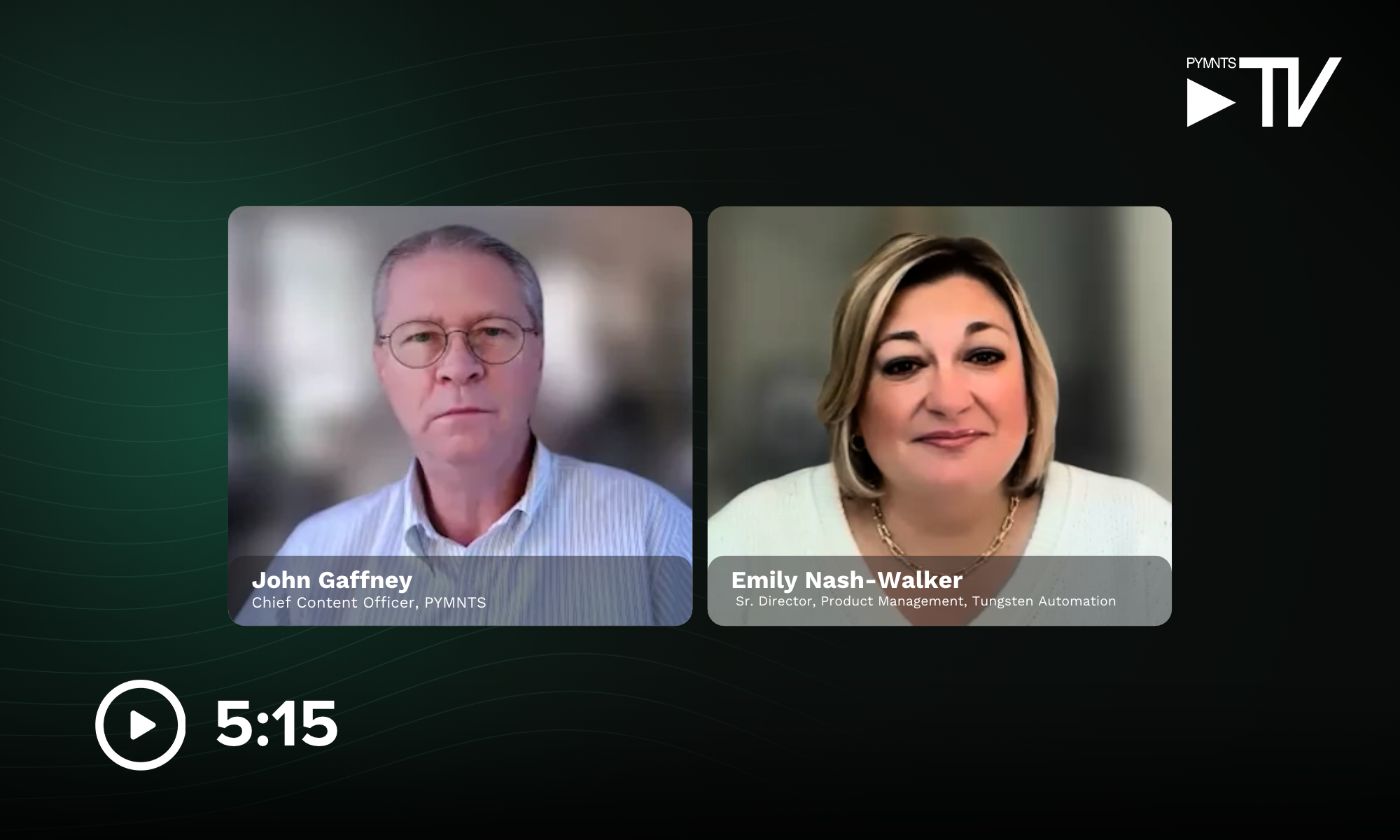
Tungsten Automation’s Emily Nash-Walker expects agents to assume work now handled by rigid rules engines, provided their actions remain auditable and traceable.
Accountability ultimately stays at the transaction level, even as AI takes on more of the work around an approval.
Complete the form to unlock this article and enjoy unlimited free access to all PYMNTS content — no additional logins required.
A company can automate routine supplier payments while requiring human approval for unusually large payments or transactions outside its normal markets.
For Emily Nash-Walker, senior director of product strategy at Tungsten Automation, that is where the next phase of accounts payable automation takes shape. Routine transactions such as rent, utilities or payments to established suppliers can pass through preset controls. A large payment, a supplier in an unfamiliar country or an exception to normal activity may still call for additional review.
In an October “What’s Next in Payments” interview with PYMNTS, Nash-Walker said companies need to decide where human review serves a specific control rather than treating review itself as the control.
“If you’re doing it for every single transaction, I think you’re adding a lot of time — and time is money — into the process,” she told PYMNTS. A recurring payment to a known counterparty can be automated within defined tolerances. Nash-Walker said a payment above a specified amount in a country where the company doesn’t normally pay suppliers may warrant examination.
Source link