Consumers seeking to build credit can face a difficult cash decision: How much money they can afford to set aside before using a secured card.
Complete the form to unlock this article and enjoy unlimited free access to all PYMNTS content — no additional logins required.
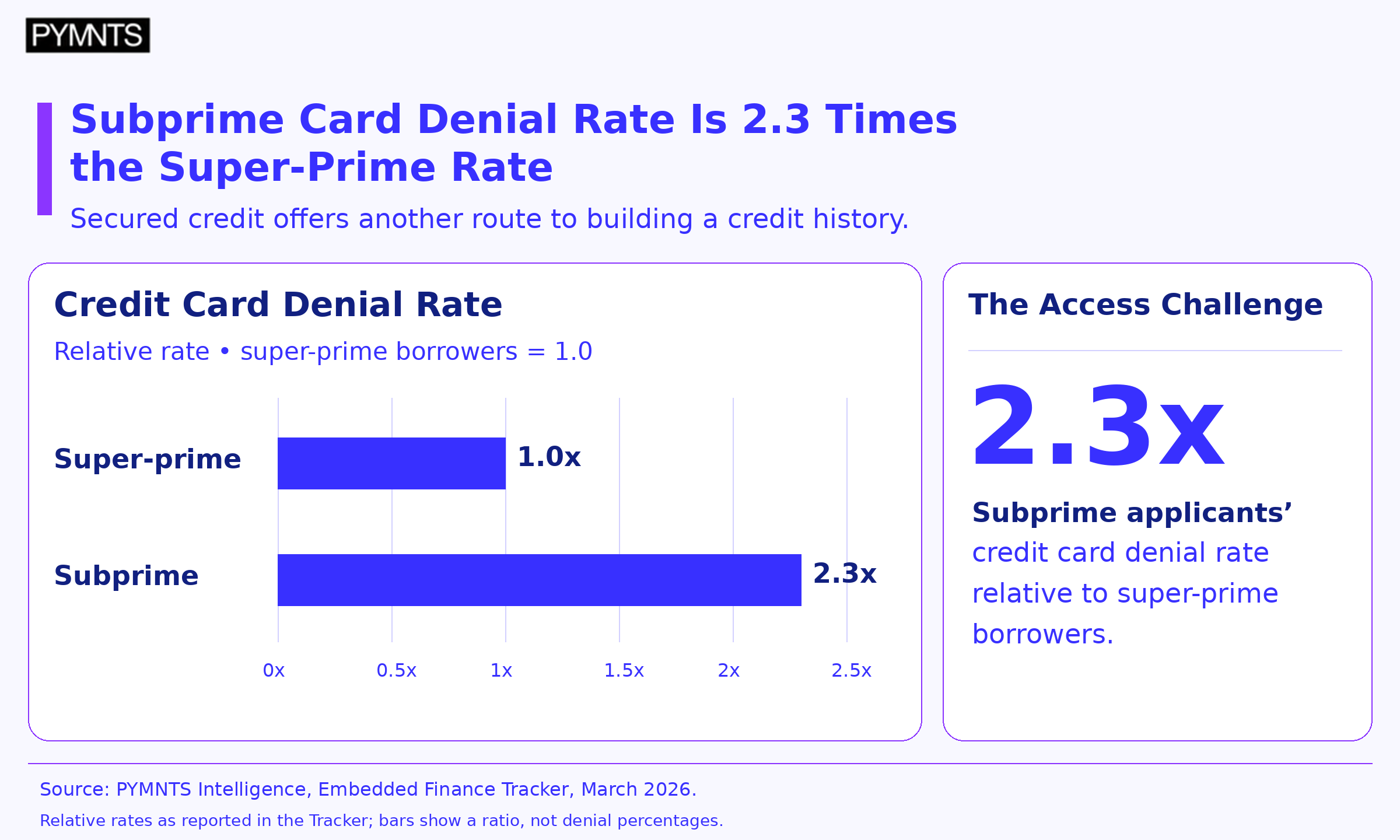
That funding requirement is central to “Secured Credit’s Next Turn: Unlocking Growth With Dynamic Funding,” the March 2026 edition of PYMNTS Intelligence’s “Embedded Finance Tracker,” produced in collaboration with Galileo. The report cites research showing that subprime applicants face a credit card denial rate 2.3 times that of super-prime borrowers. Secured credit offers another route to establishing a repayment record. Its usefulness, however, depends partly on whether consumers can manage the deposit alongside their other expenses.
Please add us to your preferred sources list so our news, data and interviews show up in your feed. Thanks!
Traditional funding can tie up money consumers need elsewhere. In the legacy model, a customer seeking a $500 secured credit limit places $500 in a locked collateral account. After spending $100 on the card, the customer must repay that purchase from checking while the original deposit remains unavailable. The example illustrates the burden of maintaining collateral and repayment funds at the same time. A product intended to support credit building can require a substantial commitment of cash before that process begins.
Dynamic funding changes how much of the deposit is secured. There’s an alternative scenario wherein a consumer deposits $500 and spends $100. Only $100 becomes secured, leaving $400 liquid.
Source link