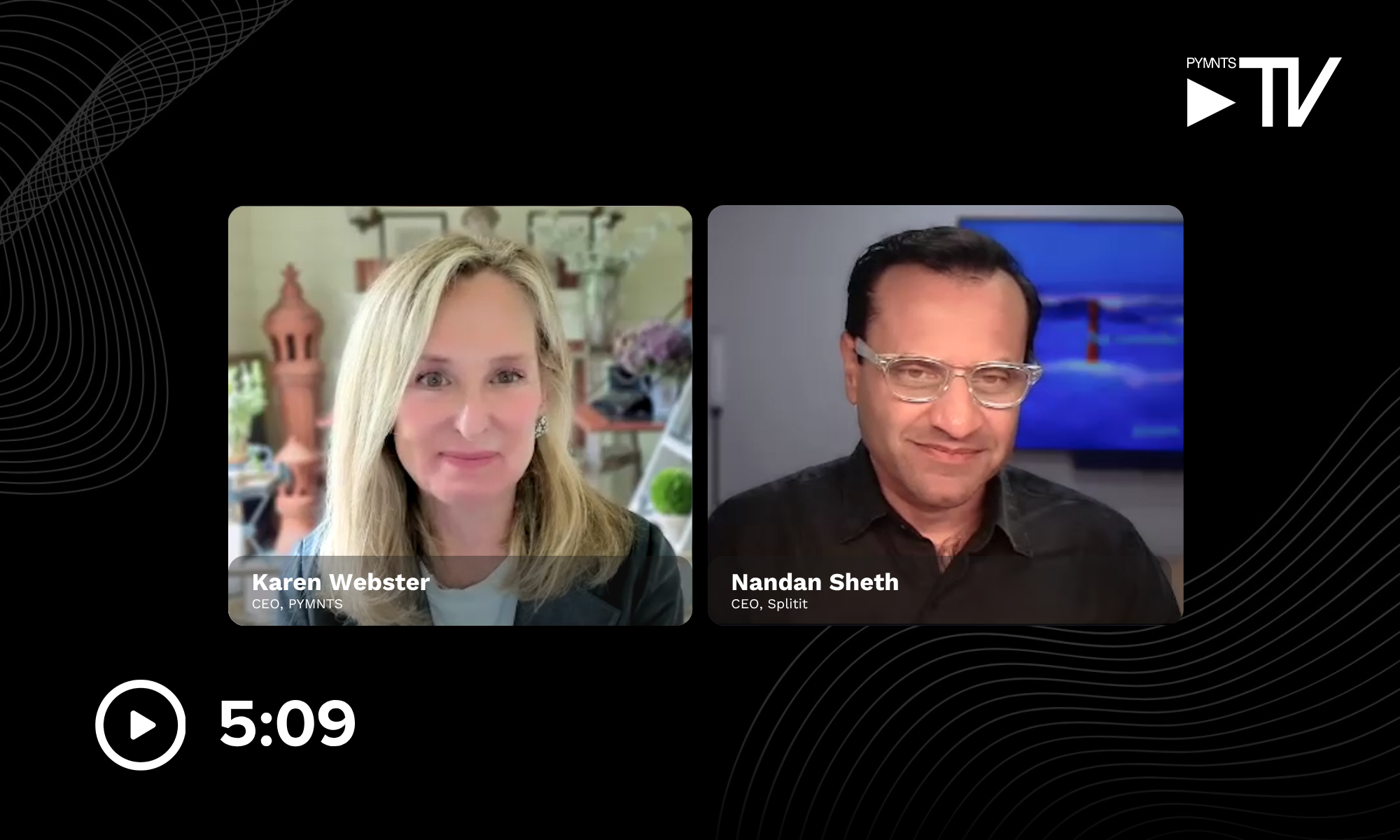
Splitit CEO Nandan Sheth tells Karen Webster AI could evaluate financing using a consumer’s liquidity, existing obligations and total borrowing costs.
Sheth sees lower-value, routine purchases as more suitable for automated payment than higher-stakes transactions.
Complete the form to unlock this article and enjoy unlimited free access to all PYMNTS content — no additional logins required.
Artificial intelligence could turn pay later from an offer at checkout into advice about whether financing the purchase makes sense in the first place. Doing that requires more than finding the lowest monthly payment. An agent needs enough context to judge financing against available cash, existing obligations and the full cost of borrowing.
For Splitit CEO Nandan Sheth, the premise begins with who benefits from the recommendation.
“The agent is working for the consumer,” Sheth told PYMNTS CEO Karen Webster.
Sheth’s own shopping experience offers an example. While looking for a watch for his wife, his AI returned the product he requested at several prices, then suggested an unfamiliar boutique brand based on what it knew about him and his family. He bought the alternative, which he said was roughly 10% to 15% cheaper.
Financing adds a different set of calculations into the mix. Joint research from Splitit and PYMNTS Intelligence cited by Webster found that 61% of consumers would take an AI recommendation for credit or pay later, while only 2% would let the agent decide on its own.
Sheth expects recommendations to come first. “The starting point will be ‘surface me the offer, I’ll make the decision,’” he said.
Source link