
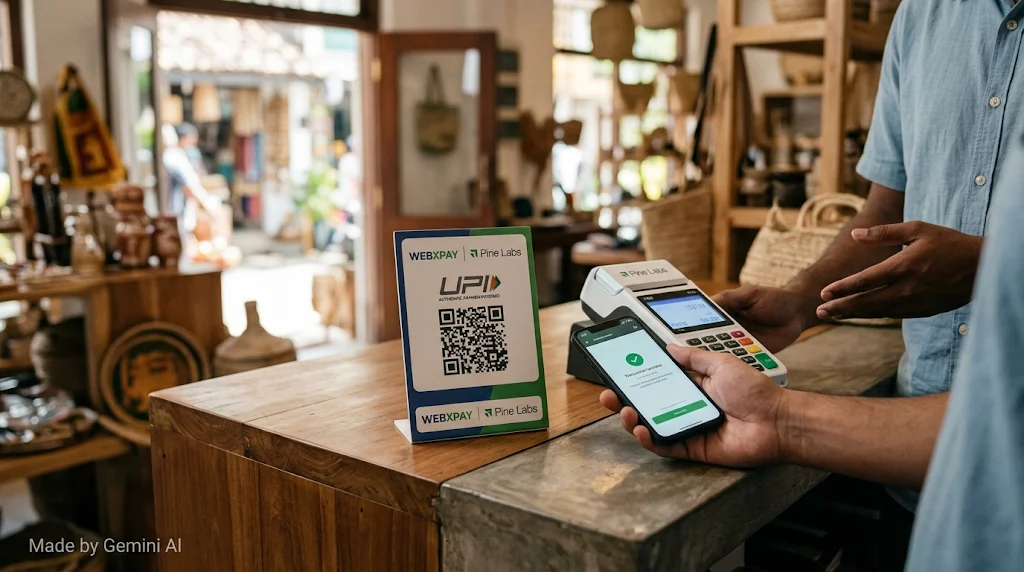
The PA-CB (Payment Aggregator Cross-Border) structure allows licensed Indian payment aggregators to partner directly with international counterparts, routing Indian payment rails into overseas markets within a regulated framework. Settlement operates on a T+1 basis, and the integration is embedded within WEBXPAY’s existing merchant infrastructure, meaning Sri Lankan businesses do not need to rework their payment stack to go live.
The PA-CB framework is a meaningful regulatory development in India’s approach to internationalising its payments infrastructure. Rather than requiring individual bilateral arrangements at the bank level, it creates a standardised pathway for licensed aggregators to extend their rails outward. The result is that a product like UPI, which processed billions of domestic transactions and achieved near-universal merchant penetration in India, can now be offered in international markets through a compliant, scalable wrapper rather than an ad hoc technical integration.
Tanya Naik, senior executive vice president and head of online business at Pine Labs, said the company intends to replicate the model across Southeast Asia and every market where Indian travellers and consumers represent a significant commercial force. Sri Lanka is the first activation under this framework, with further markets signalled but not yet named.
Thilak Piyadigama, executive chairman of WEBXPAY, framed the commercial case directly: “Indian customers already know and trust payment methods such as UPI, cards and net banking. Bringing that familiarity into the online checkout experience of Sri Lankan merchants can remove a significant point of friction and help businesses convert more Indian demand into revenue.”
Source link