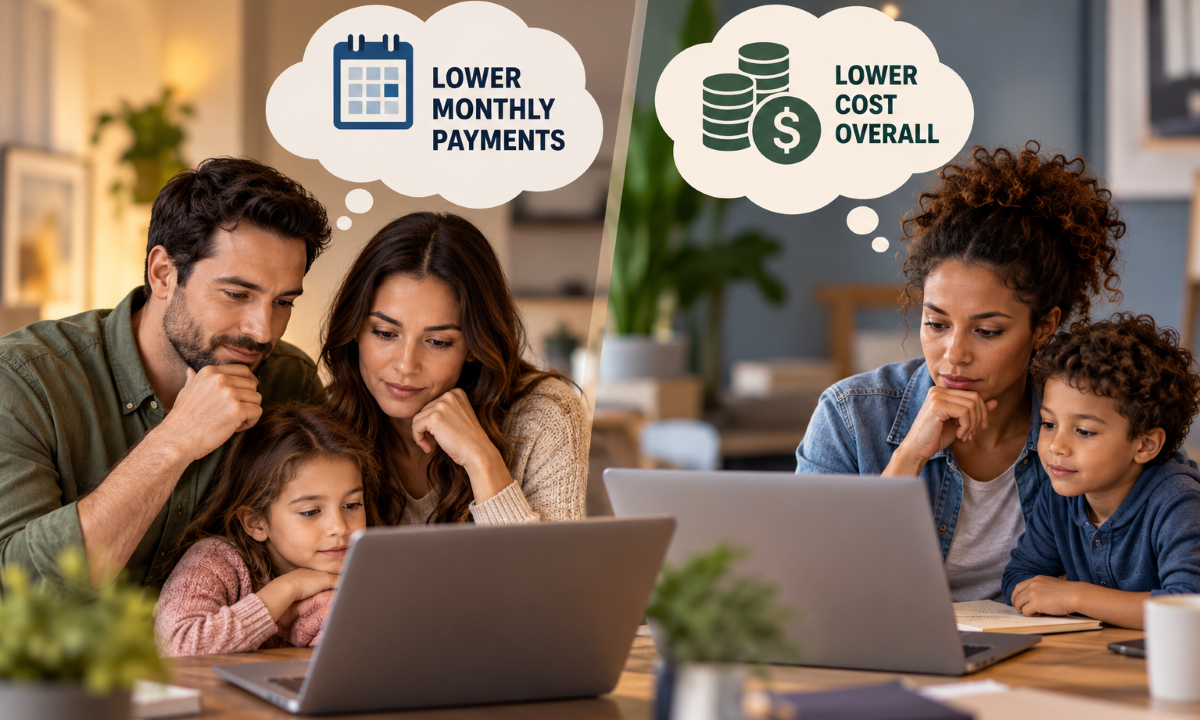
Monthly payment size leads pay later considerations for 34% of married parents.
Purchase or payment cost and interest-free terms join payment size among every household group’s top three priorities.
Repayment schedules give providers a way to distinguish offers carrying the same interest rate.
Pay later providers competing on monthly payment size, total cost and interest-free terms face different definitions of an attractive offer — even among households with children.
Complete the form to unlock this article and enjoy unlimited free access to all PYMNTS content — no additional logins required.
Monthly payment amount is the leading consideration for 34% of married parents, according to PYMNTS Intelligence’s “The Family Factor: Where Pay Later Providers Can Compete, an analysis of the broader Pay Later Ecosystem Report.” Purchase or payment cost follows at 26%.
Single parents reverse that emphasis: 29% put purchase or payment cost first, while 25% prioritize the monthly amount.
The differences suggest two approaches to serving families. An offer emphasizing the recurring payment addresses married parents’ strongest stated priority. An offer emphasizing cost speaks more directly to single parents’ leading concern. Both groups value affordability, giving providers a reason to distinguish between the expense consumers take on and the amount they commit to paying each month.
The eight-percentage-point gap between monthly payment amount and cost among married parents makes the recurring obligation particularly relevant to this group. Among single parents, cost leads monthly payment amount by four points.
A single family-oriented proposition would have to accommodate both preferences. The data support treating household composition as a factor in how financing offers are designed and presented.
Source link