Unlike the stress seen in microfinance, agricultural portfolio performance has remained reasonably strong over the past few years, with slippages of 1-3 per cent and improving gross non-performing assets.
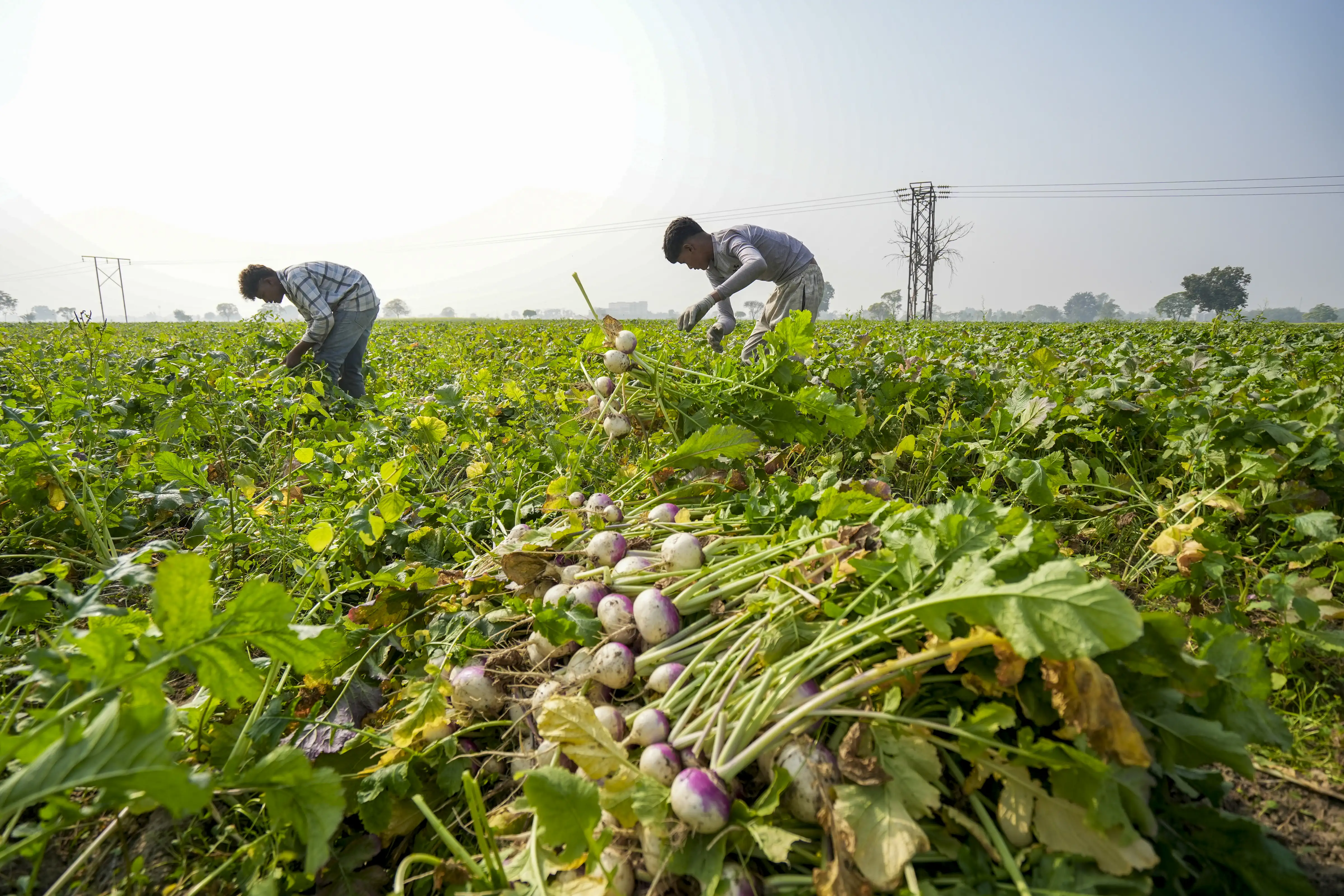
Amritsar: Farmers harvest fresh turnips in a field at a village on the outskirts of Amritsar. (PTI Photo/Shiva Sharma)(PTI11_27_2026_000211B)
Bank of Maharashtra and Canara Bank face higher agricultural loan stress exposure due to concentration in drought-hit states.
Agricultural GNPAs have fallen to 5 per cent from 9-10 per cent, with slippages at 1-3 per cent.
Gold-backed loans account for 25-75 per cent of agricultural loans at most PSBs and 80-95 per cent at smaller private banks.
Restructuring could reach Rs 10,000 crore, with an estimated 1-4 per cent impact on FY27 EPS.
India’s deficient 2026 monsoon could expose public sector banks (PSBs) to higher agricultural loan stress than private banks, with Bank of Maharashtra and Canara Bank disproportionately exposed because of their concentration in the agricultural segment. Maharashtra and Karnataka, the worst-hit states, have declared drought across large parts of their territories. India recorded its driest monsoon in over a decade, with rainfall deficit of around 13 per cent. Among private banks, Federal Bank and DCB Bank have exposure to crop loans in Maharashtra and Karnataka. Unlike the stress seen in microfinance, agricultural portfolio performance has remained reasonably strong over the past few years, with slippages of 1-3 per cent and improving gross non-performing assets (GNPAs), according to ICICI Securities. Advt
The agricultural GNPA ratio has declined to around 5 per cent from 9-10 per cent a few years ago, although the improvement has lagged the corporate segment.
Source link