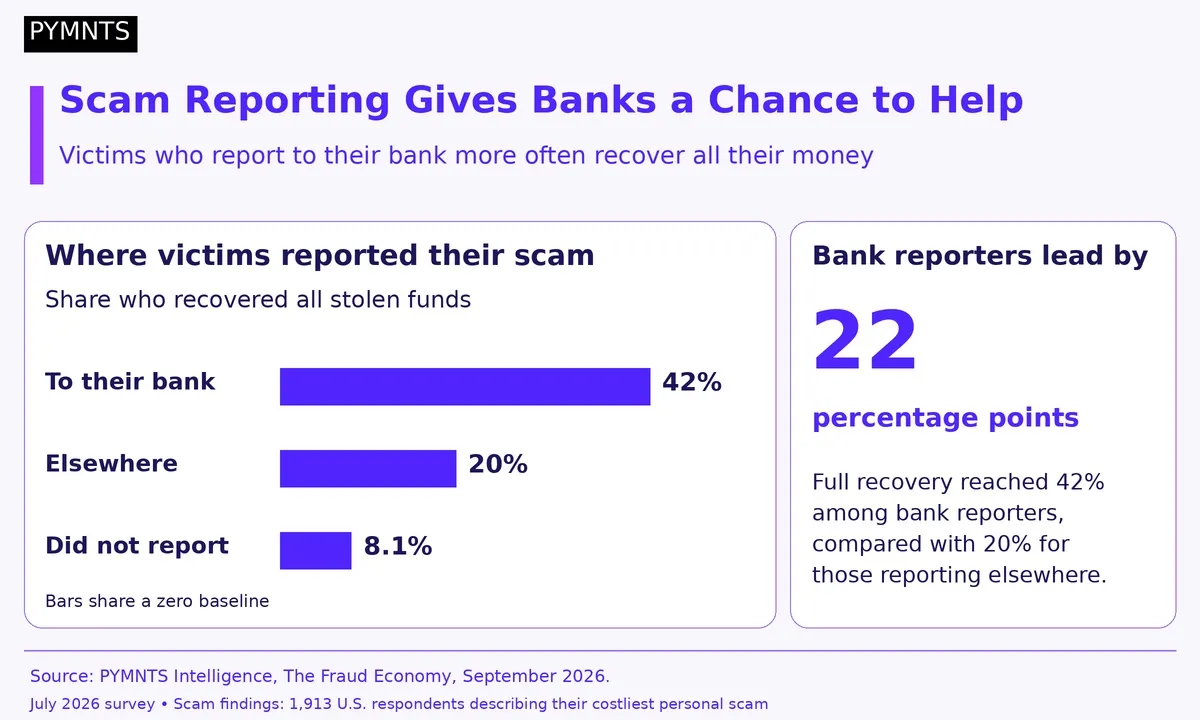
Banks have an opportunity to help more scam victims recover their money by making reporting what happened clearer.
Complete the form to unlock this article and enjoy unlimited free access to all PYMNTS content — no additional logins required.
The September PYMNTS Intelligence report “Fraud’s Loyalty Tax: How Scams Cost Banks Their Customers,” based on a survey of 9,524 consumers in the United States, examined how scams reach victims, what they lose and how they respond. Its detailed scam findings drew on 1,913 respondents describing their costliest personal scam.
Most victims reported the incident to their bank, but a growing share reported it nowhere. The findings suggested that banks could help more customers seek assistance through clearer instructions and support that recognizes the emotional strain of being scammed.
Other findings showed why banks have reason to improve that experience. Some 17% of scam victims had already switched financial providers because of being scammed, rising to 25% among those who lost more than $5,000. Yet victims were more likely to increase their use of online and mobile banking than reduce it.
Customers haven’t abandoned digital banking. Helping them report a loss and understand what happens next gives financial institutions an opportunity to support these relationships.
At PYMNTS Intelligence, we work with businesses to uncover insights that fuel intelligent, data-driven discussions on changing customer expectations, a more connected economy and the strategic shifts necessary to achieve outcomes. With rigorous research methodologies and unwavering commitment to objective quality, we offer trusted data to grow your business.
Source link