Volkswagen has spent years converting its Zwickau factory to build electric cars, and now only electric cars roll off its production lines. But now it has received a new assignment: taking cars apart. The German plant has opened an industrial dismantling line, adding a new revenue stream.
Zwickau became VW’s electric manufacturing hub through a €1.2 billion conversion that began in 2018. ID.3 production started in November 2019, the last combustion car followed in June 2020, and the transformation was completed in January 2022 with the ID.5. Retooled production lines, extra automation, and extensive employee training now enable the factory to build six MEB-based EVs for Volkswagen, Audi, and Cupra.
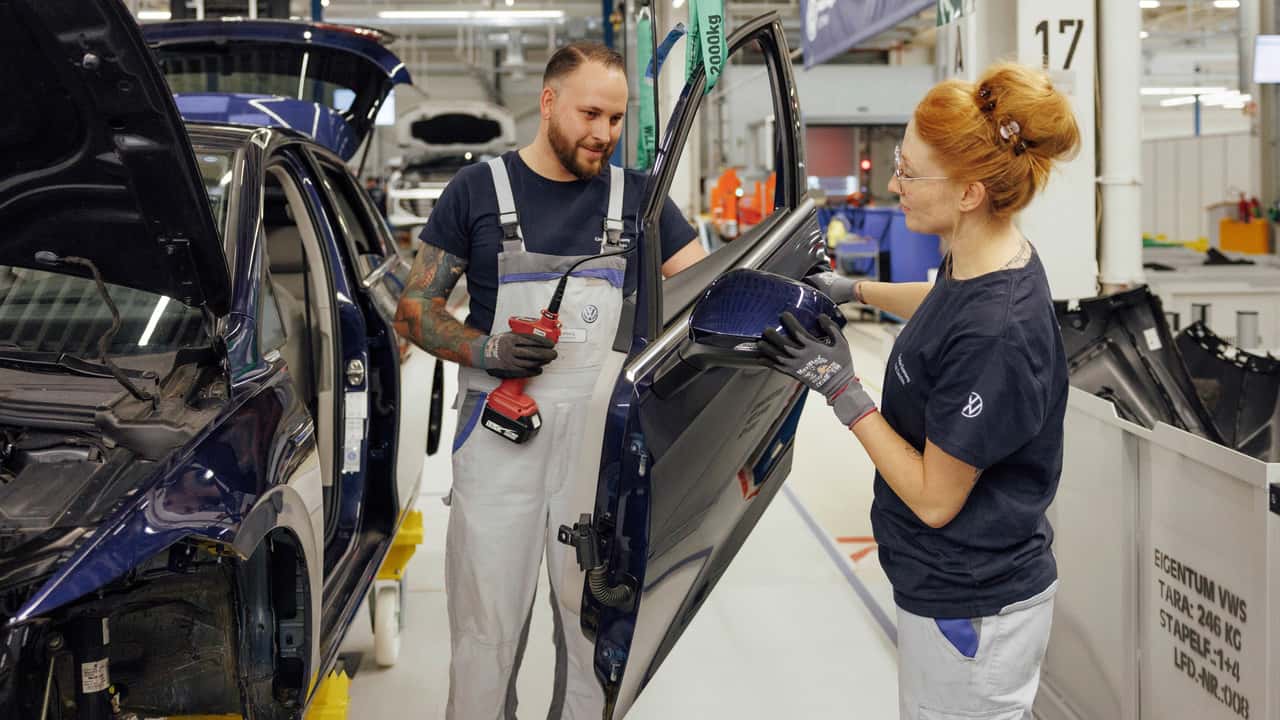
The new eight-stage dismantling line will initially handle preproduction vehicles, but will eventually also handle cars at the end of their life. From 2027, it will process 4,100 vehicles annually across two shifts, employing 100 workers who were retrained for the new role. Construction and approvals took nine months, finishing three months early; VW says it could reuse manufacturing equipment to cut costs.
The automaker says it has been selling usable original parts recovered at Zwickau since July, with doors, bumpers, motors and transmission components reportedly in especially high demand. They’re available through its dealer and service networks, independent workshops and parts retailers.
The idea is to make repairs affordable enough to keep older cars on the road instead of writing them off. The dismantling line initially handles pre-production vehicles, although VW doesn’t identify which cars supplied the parts already sold.
Source link