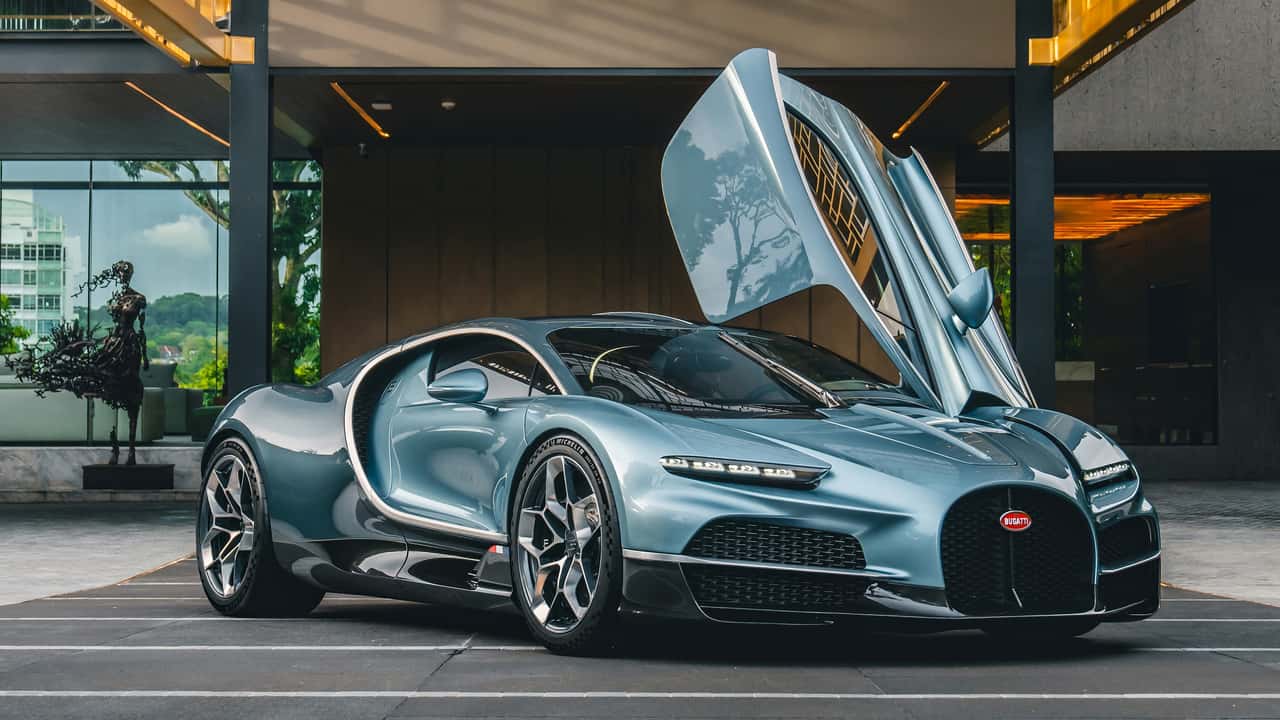
The Volkswagen Group wanted Bugatti’s Chiron successor to be electric. Still, Mate Rimac pushed for a different approach: a clean-sheet design with a naturally aspirated V16 engine at the heart of a hybrid setup. His experience with the Nevera convinced him that demand for ultra-expensive electric hypercars was too limited to justify turning Bugatti’s flagship into a pure EV.
When Rimac took control of Bugatti alongside Porsche in 2021, the VW Group was moving aggressively toward electrification in the wake of the messy and immensely costly Dieselgate. In theory, an electric hypercar would have aligned with that strategy while allowing the French marque to benefit from Rimac’s expertise in high-performance electric powertrains.
However, Rimac wasn’t interested in taking the easy route. As he explained in an interview with Automotive News Europe, the quickest and most cost-effective solution would have been to put a Bugatti badge on the Nevera and call it a day. Instead, he wanted a completely different product that would offer customers something they couldn't get from his own electric hypercar brand.
'On paper, it could be Bugatti [on the Nevera’s platform], right? Plus, it would be a lot easier than doing a completely new car with a new combustion engine. However, that is what I ended up doing with the Tourbillon because based on the feedback from the market on the Nevera I realized the market was going in a different direction.
Source link