For years, the most visible promise of vertical takeoff and landing aircraft (VTOL) has been straightforward: replace the car ride to the airport, the congested highway commute, or the cross-city trip with a short flight. That vision remains central to the electric vertical takeoff and landing (eVTOL) industry.
But as the technology moves closer to real-world deployment, another part of the VTOL market is developing in a very different direction. The same fundamental ability to take off and land vertically is being adapted for military logistics, autonomous resupply, electronic warfare, and operations where runways may not exist, or may be too vulnerable to use.
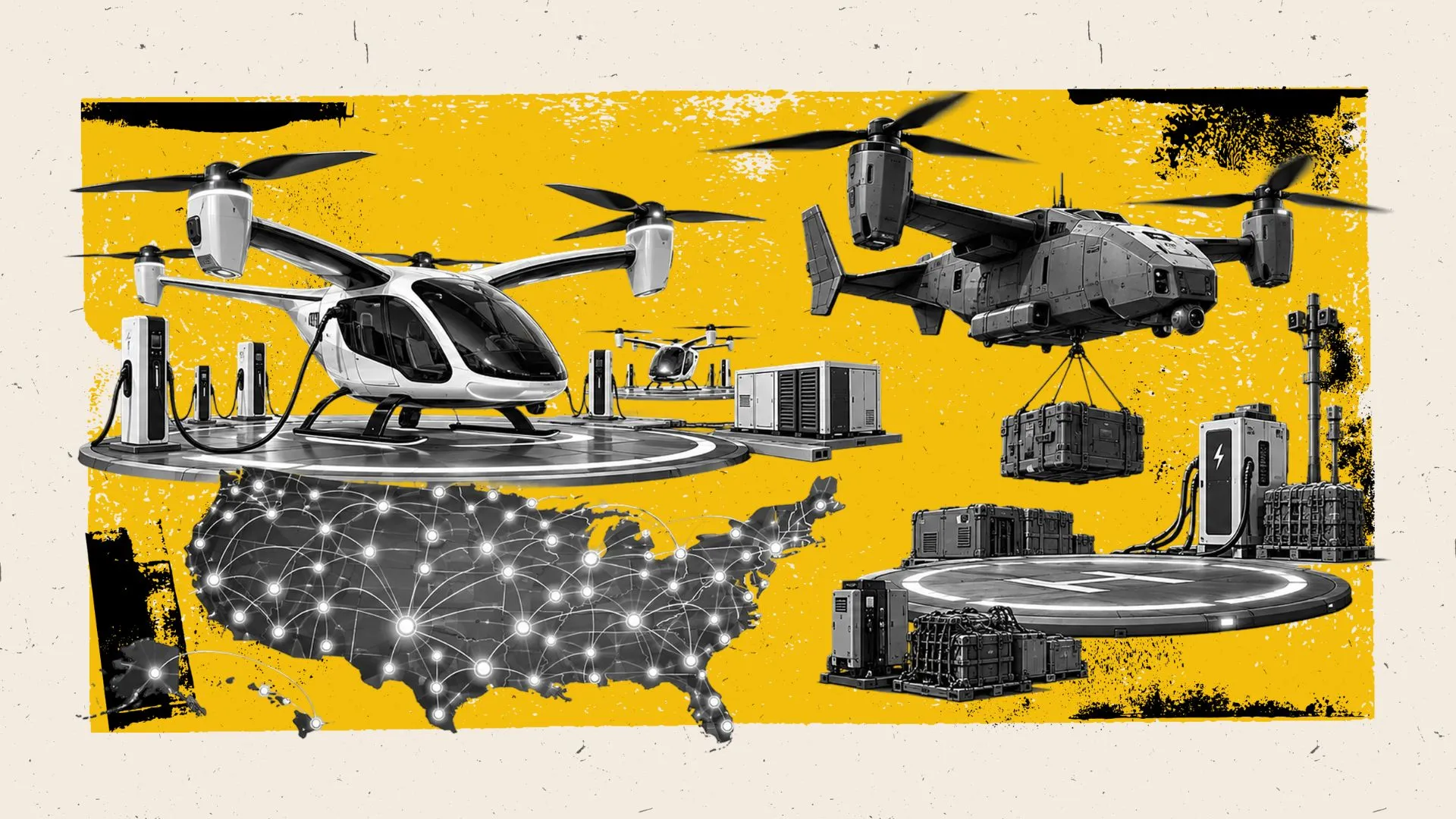
That divergence is becoming increasingly notable. US aerospace and defense company Archer Aviation is working with industry partners to establish a shared electric charging network spanning more than 250 aviation sites in the United States. Mayman Aerospace, meanwhile, is developing turbine-powered autonomous VTOL aircraft for missions where electric propulsion cannot yet deliver the required combination of speed, range and payload.
And in Northern Europe, Lithuanian company Airvolve is preparing hybrid-electric autonomous cargo aircraft for trials in Finland and Sweden focused on tactical resupply, casualty evacuation and other missions in difficult environments.
For Archer Aviation , one of the biggest challenges is no longer simply proving that an eVTOL can fly, but making sure there is somewhere for it to charge, land, and operate once commercial services begin. Bryan Bernhard, Chief Growth and Infrastructure Officer at Archer, argues that infrastructure cannot be treated as something that comes after aircraft certification.
Source link