
India's transition to zero-emission buses has so far been driven largely by public transport authorities (PTAs). However, public fleets represent only 8 to 10 per cent of the country's bus market, while private operators account for around 90 per cent or approximately 1.6 million buses. A broader transition in the bus segment will thus happen only when the private sector accelerates adoption.
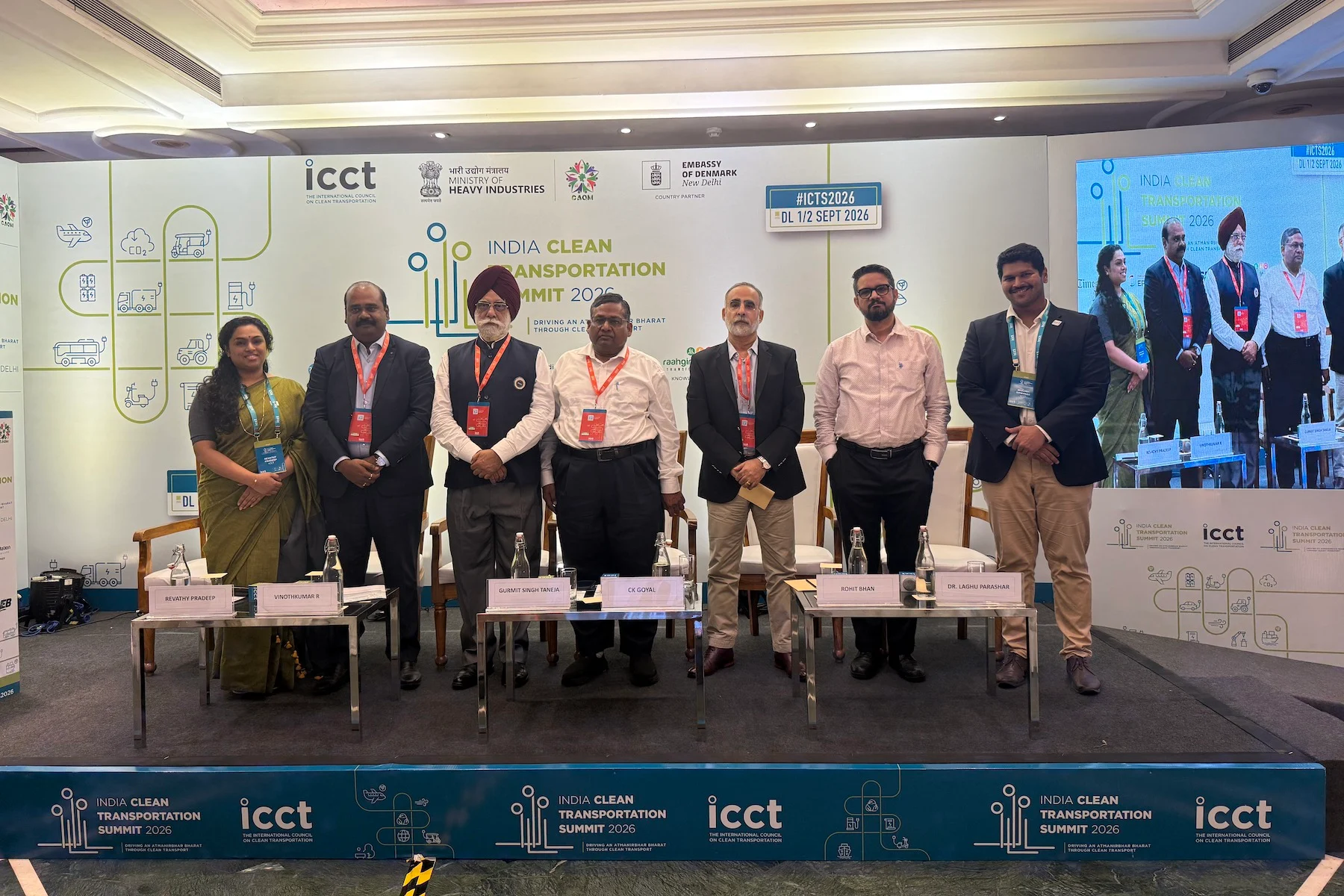
Between 30 and 35 per cent of the 1.6 million privately operated buses in India are used for school transport and fall under the education institution category, pointed out Dr Laghu Parashar, Senior Transport Specialist at the World Bank, during a panel discussion on electrifying India’s school bus fleet at the India Clean Transportation Summit 2026. He highlighted the potential for school transport to be the first segment of the private bus market to see electrification at scale. “Given the opportunity, I think the school transportation will be the first mover in the private sector,” noted Parashar.
While the private bus market also includes intercity transport, staff, and tourist transport, Parashar identified two main reasons why school transport could be the early mover on the electrification front. One of the major challenges in adopting electric buses for private transport companies is land availability.
Most private bus operators run small fleets and do not own dedicated parking spaces, generally parking their buses by the roadside, under flyovers, or in rented spaces. Private operators therefore lack suitable locations to install charging infrastructure. Schools fare better in this regard because they typically have land available on their premises.
Source link

![Autonomous military 6×6 packs electric drive and go-anywhere grit [video]](https://images.themorningpulse.fyi/uploads/2026/10/rss-mv58csf3-q8jwap-meta.webp)