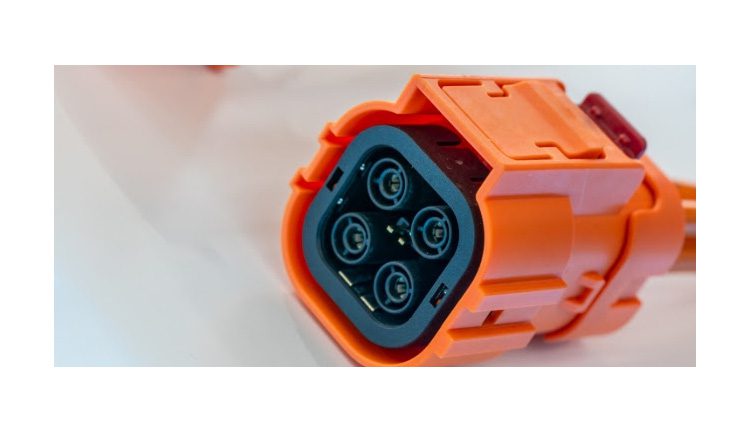
NexPoint Materials, formerly part of SABIC’s Engineering Thermoplastics business, says two of its resins have achieved the highest rating in the UL 2597 Surface Tracking Test (STT) at 900 V. The grades are LEXAN BPL1000, from its polycarbonate (PC) family, and CYCOLOY C2950, from its PC/acrylonitrile butadiene styrene (PC/ABS) line. The company presents the results as performance data for engineers choosing insulating materials for EV systems, faster-charging architectures, connectors and battery systems.
Surface tracking occurs when electrical discharges on the surface of an insulating material progressively create a conductive path. The discharges carbonize and damage the material and can compromise its insulation. UL 2597 is a standardized method for evaluating insulating materials intended for transportation applications at voltages from 600 V to 900 V, so 900 V is the top of the test’s range.
NexPoint also offers flame-retardant VALOX polybutylene terephthalate (PBT) resins, including grades it lists as having a high comparative tracking index (CTI). Other VALOX grades, designed for high service temperatures, include some with a relative thermal index (RTI) of up to 140° C. High-CTI materials can help engineers reduce creepage distances while maintaining safety margins, according to the company.
NexPoint recommends its flame-retardant LEXAN, CYCOLOY and VALOX resins for high-voltage connectors, EV fast charging systems, power distribution and energy storage. NexPoint is also offering its high-CTI resins for more compact electrical connectors in AI data center server racks.
“As EV battery voltage levels increase beyond the standard 400 volts, engineers need greater confidence in the performance of insulating materials under more-demanding electrical conditions,” said Dinesh Munjurulimana, Electrification Leader, Technology at NexPoint.
Source link