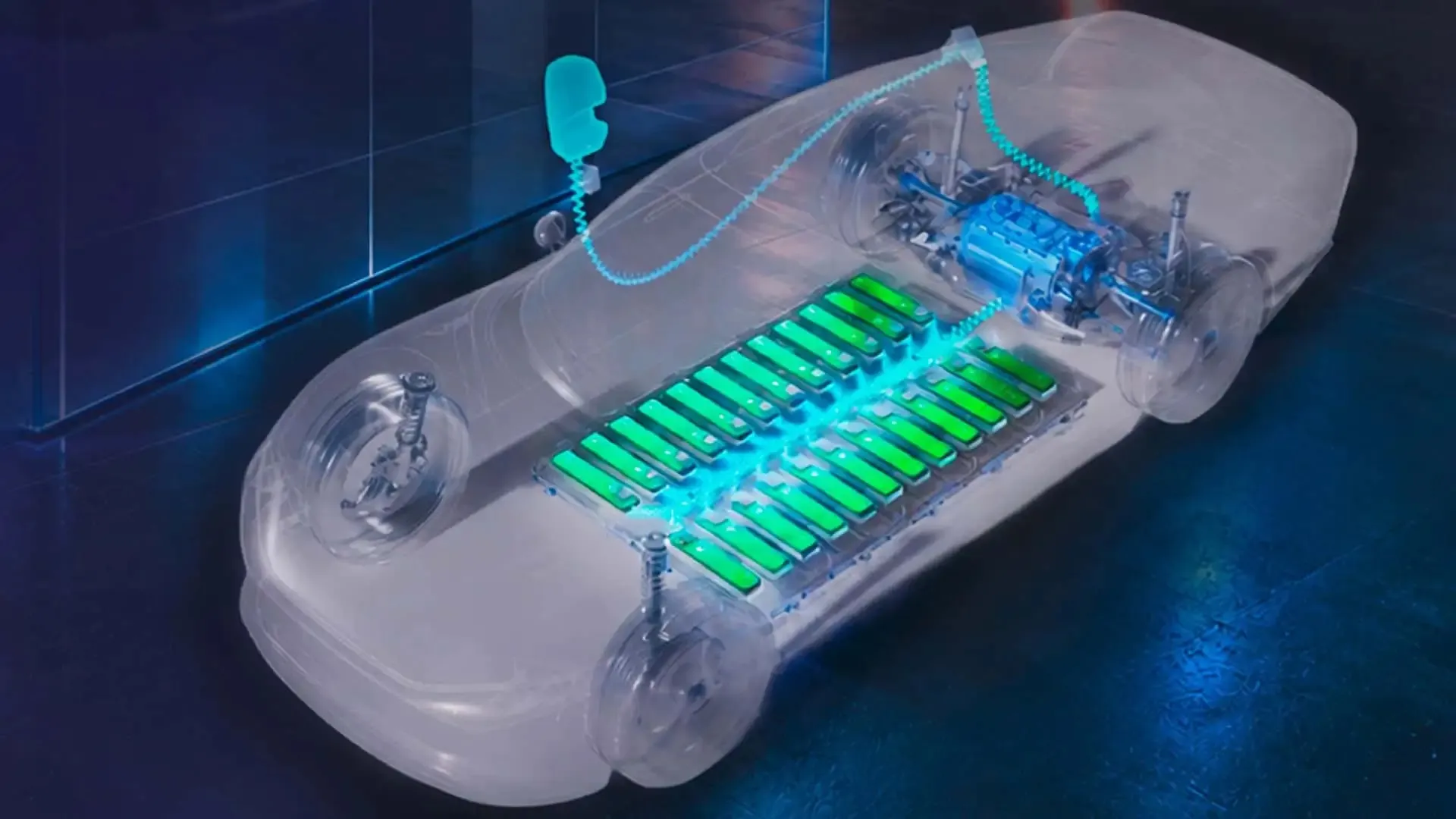
Mercedes-Benz is developing an electric vehicle architecture designed to keep the traction inverter supplied with 800 volts even as the battery discharges. The system uses small power converters that manage individual cells or groups of cells, allowing the vehicle to maintain a stable high-voltage supply as the battery’s charge level changes.
In a conventional EV, cells connected in series determine the pack’s voltage, which falls as the battery discharges. Weaker or aging cells can also limit the performance of the entire pack.
Mercedes’ approach would give the vehicle more control over how individual cells contribute while allowing the automaker to rethink which components it needs for charging and propulsion.
Mercedes’ design distributes power conversion across multiple devices, each capable of delivering up to 3 kilowatts. These units, which the company calls Power Converters, are connected in parallel and coordinate how energy moves from individual cells or cell groups to the vehicle’s high-voltage system.
The control system can reduce the load on weaker cells while the converters work together to maintain a stable direct-current supply. That gives the vehicle a way to manage differences between cells within the same pack.
At the same time, the converters regulate the voltage delivered to the inverter as the pack discharges.
The traction inverter converts direct current into alternating current for the electric motor. With a steady 800-volt input, Mercedes could optimize the inverter for a fixed voltage and improve its efficiency. A common input voltage could also make it easier to use the same powertrain components across different drivetrain designs.
Source link