
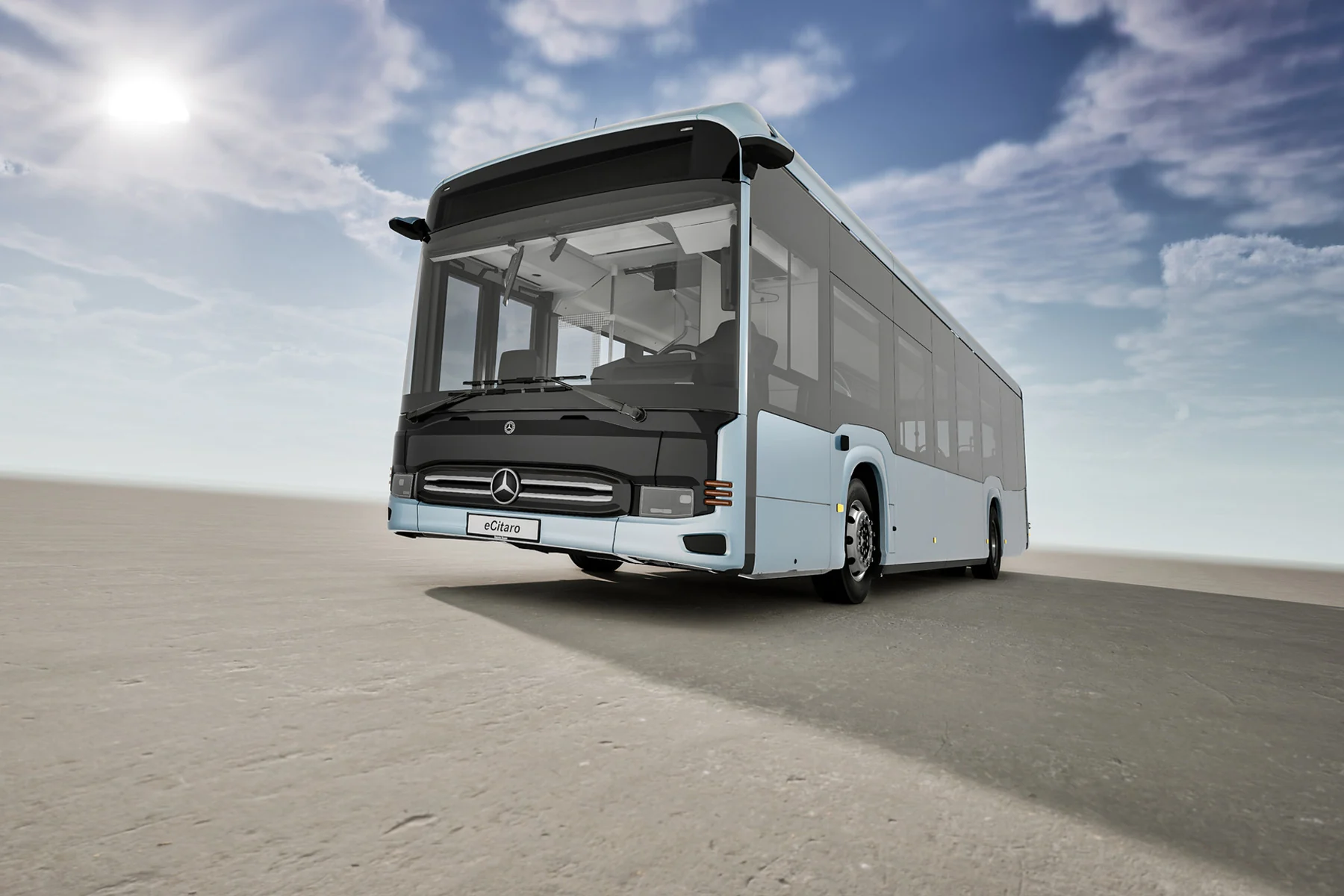
Daimler Buses has announced the second generation eCitaro. From 2028, the electric city bus will be based on a dedicated electric platform, utilise LFP batteries – and even handle some intercity routes. We attended the presentation of the near-series prototype in Munich.
Daimler Buses has been producing the battery-electric Mercedes-Benz eCitaro in series since 2018. Exactly ten years after its debut, the successful e-city bus is set to be replaced by a successor. At its own event in Munich, Daimler Buses has now unveiled a near-production study of the new eCitaro. The key message: the brand is positioning the eCitaro as its flagship city bus. The second generation will no longer share its platform with the combustion-engine Citaro but will instead stand on a dedicated battery-electric vehicle platform. Furthermore, from 2030 onwards, no more diesel Citaros will be sold in Europe. The spotlight today, therefore, belongs to Mercedes’ new city bus flagship.
At the presentation in the Bavarian capital, Daimler Buses already provided plenty of details about it. At the heart of the new electric architecture is a new battery technology featuring LFP cell chemistry and a modular compact battery kit, as the manufacturer puts it. In the new eCitaro, the battery packs will be smaller but more numerous. They will be housed in the underfloor and on the roof. There are also significant developments in the motors – more on the drivetrain details to follow.
For context, it is important to note that the new BEV platform supports vehicle lengths from ten to just over 18 metres.
Source link