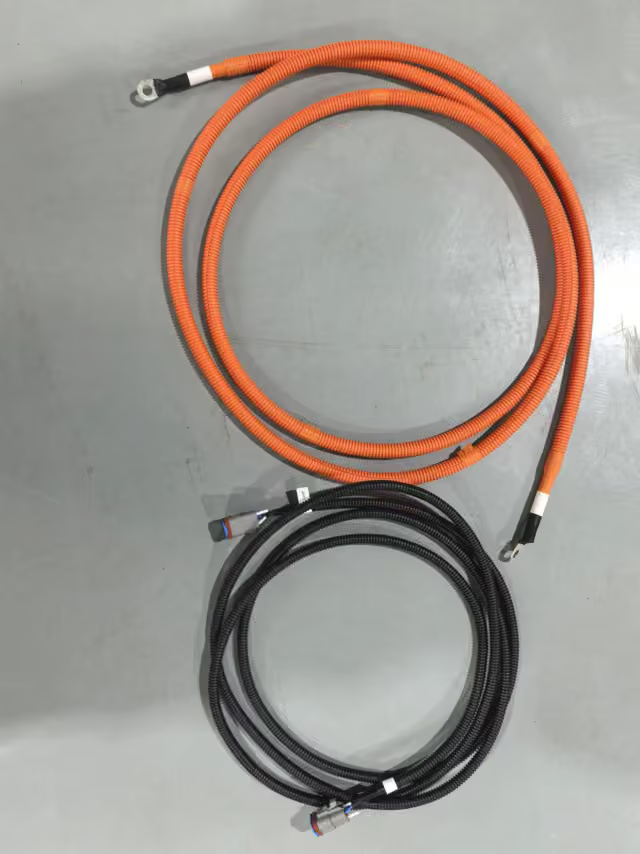
A useful specification describes the circuit, where the harness will run and the evidence needed to approve it. The vehicle’s responsible engineering team should set the electrical safety requirements.
When specifying high-voltage wire harnesses, identify the circuit and its operating voltage range, including the maximum expected voltage rather than only the nominal system label. State whether the circuit carries DC or AC, and flag relevant transient conditions for engineering review.
Describe current over time. A continuous load and a short peak are different requirements, so include how long peaks last and how often they occur. If charging and driving produce different load patterns, describe both where they apply.
Temperature belongs in the same conversation. Give the expected surroundings, nearby heat sources and any enclosure or bundling that affects the installed cable. Ask the supplier to review the cable, contacts and connectors together under those conditions. A connector’s current rating needs temperature context. IEC 60512-5-2 describes testing its current-carrying capacity at elevated ambient temperature.
If a proposed part cannot meet the requirement, ask for the limitation to be identified in the quote. Do not leave an operating assumption hidden in a catalog rating.
A connector family name leaves several choices unresolved. Provide approved part numbers for both mating halves, contacts, seals and locking parts, along with the wire size and cable diameter they must accommodate. Include the pin assignment and any features intended to prevent incorrect mating.
The review should also cover shielding and any high-voltage interlock loop (HVIL). Specify its required wiring and interface behavior from the vehicle design rather than asking the harness supplier to infer them.
Source link