
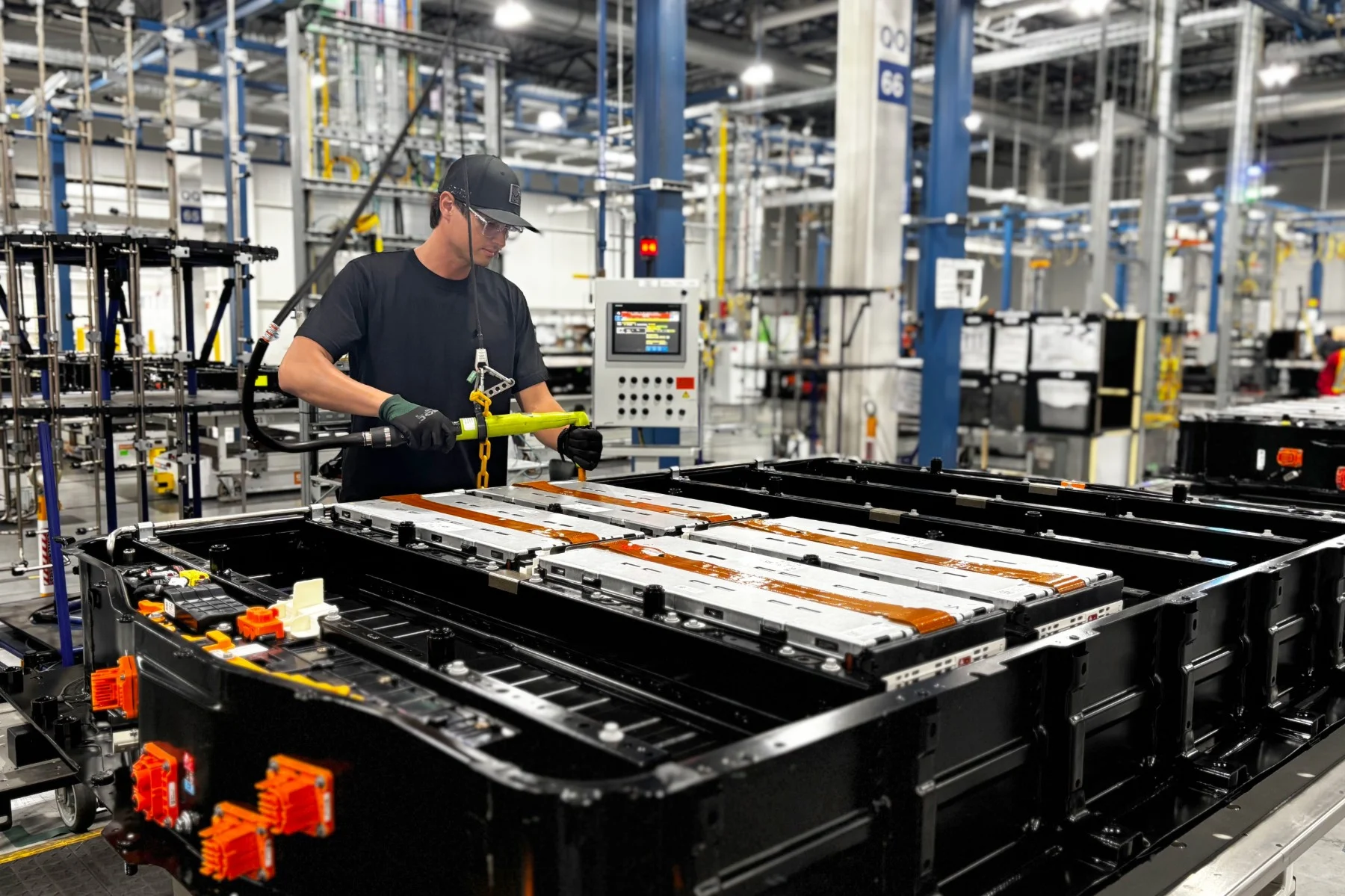
General Motors has built its first production vehicles with battery cells whose cathode active material is made entirely from recycled nickel, cobalt, and manganese. The raw materials are partly sourced from decommissioned batteries of GM vehicles and were recovered and processed by partner Cirba Solutions.
General Motors, together with recycling company Cirba Solutions and other partners, has completed a pilot project for a closed-loop recycling system for electric vehicle batteries. In this initiative, end-of-life batteries from GM EVs – including from brands like Cadillac, Chevrolet, and GMC – were recycled, with the recovered raw materials reused to produce new battery cells. The standout feature: the cathode active material (CAM) of the new cells is made entirely from recycled nickel, cobalt, and manganese. The first EVs equipped with these cells have already left GM’s factories – not as internal test vehicles for validation, but as regular production EVs for customers.
For the pilot project, General Motors collected 80 end-of-life high-voltage batteries, which were processed by Cirba Solutions at a recycling facility in Ohio, USA. After mechanical processing, the initial output was a so-called black mass, which was further refined to separate the contained raw materials. This process yielded more than 12 tonnes of new cathode active material. The nickel, cobalt, and manganese in this material were 100 per cent recycled. Before being used in new battery cells, the material had to meet the same quality, performance, and safety requirements as material sourced from primary raw materials.
The production of the new cells was handled by Ultium Cells, the battery joint venture between GM and LG Energy Solution.
Source link