

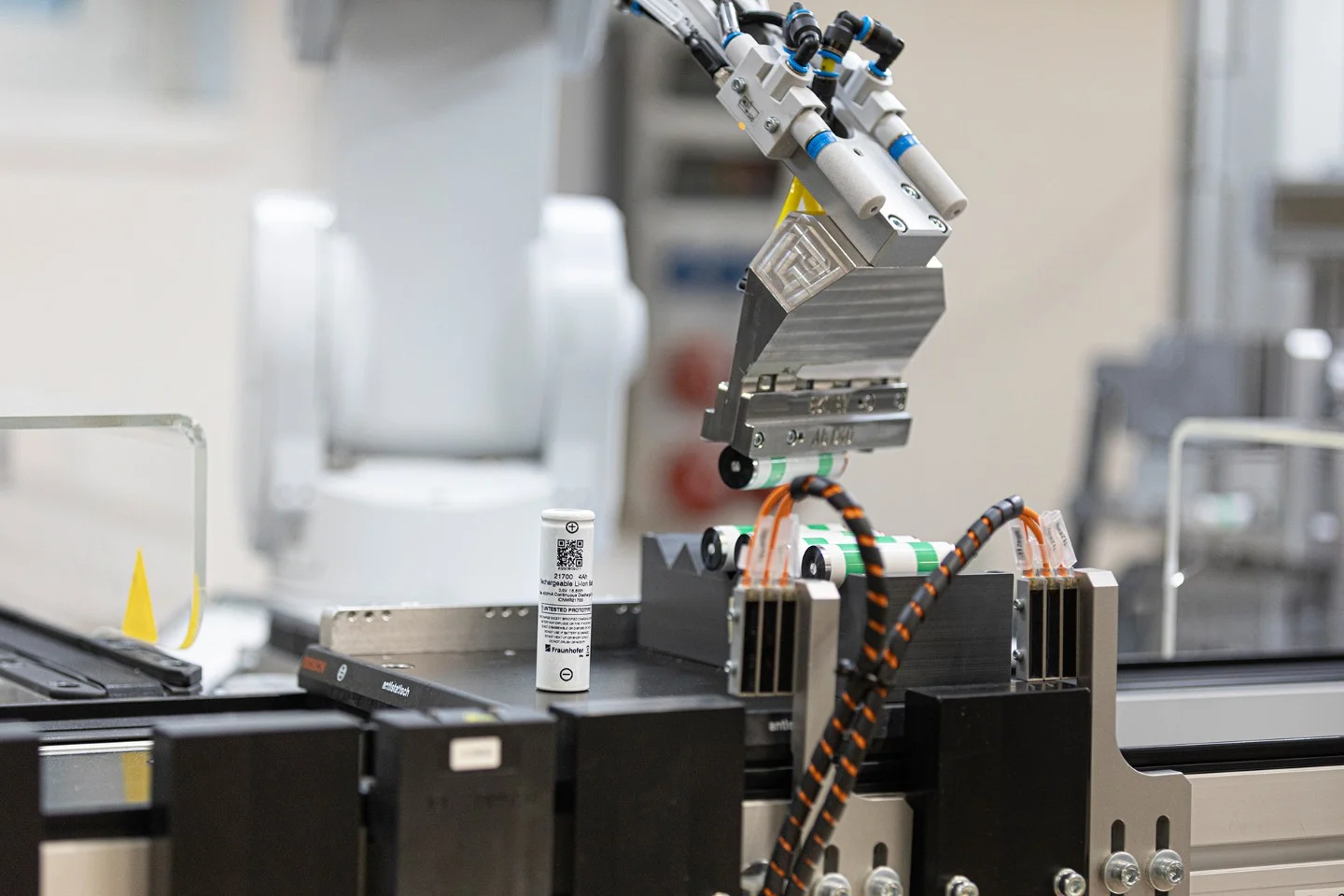
The Fraunhofer IPA and the University of Stuttgart have developed a new cell and electrode technology for aluminum anodes. It is intended to make the previously problematic volume changes during charging and discharging manageable, thereby enabling the use of aluminum as an anode material for practical battery applications.
Aluminium has long been considered a potential replacement for graphite or silicon in lithium-ion batteries. The material is relatively inexpensive, widely available, and offers high capacities. However, in practice, this approach has so far failed due to mechanical stress on the electrode: during charging and discharging, aluminium undergoes volume changes that can lead to cracks, pores, and ultimately pulverisation of the electrode material. The result is capacity loss and a limited lifespan.
The Fraunhofer Institute for Manufacturing Engineering and Automation IPA, together with the Institute for Photovoltaics at the University of Stuttgart, has now developed and patented a cell and electrode technology that addresses these ageing processes. According to the researchers, the approach stabilises the materials during operation and maintains electrical contact within the electrode over many charge and discharge cycles.
“We are making a battery technology that has been known for a long time but has been difficult to control practically usable,” said Kai Peter Birke, Scientific Director for Battery and Hydrogen Systems and Storage at Fraunhofer IPA, in a German-language press release.
The approach completely eliminates graphite and silicon from the anode. This could not only reduce the demand for graphite, which is considered a critical raw material for the European battery industry; it would also eliminate the problems associated with significant volume changes in highly silicon-based anodes.
Source link