
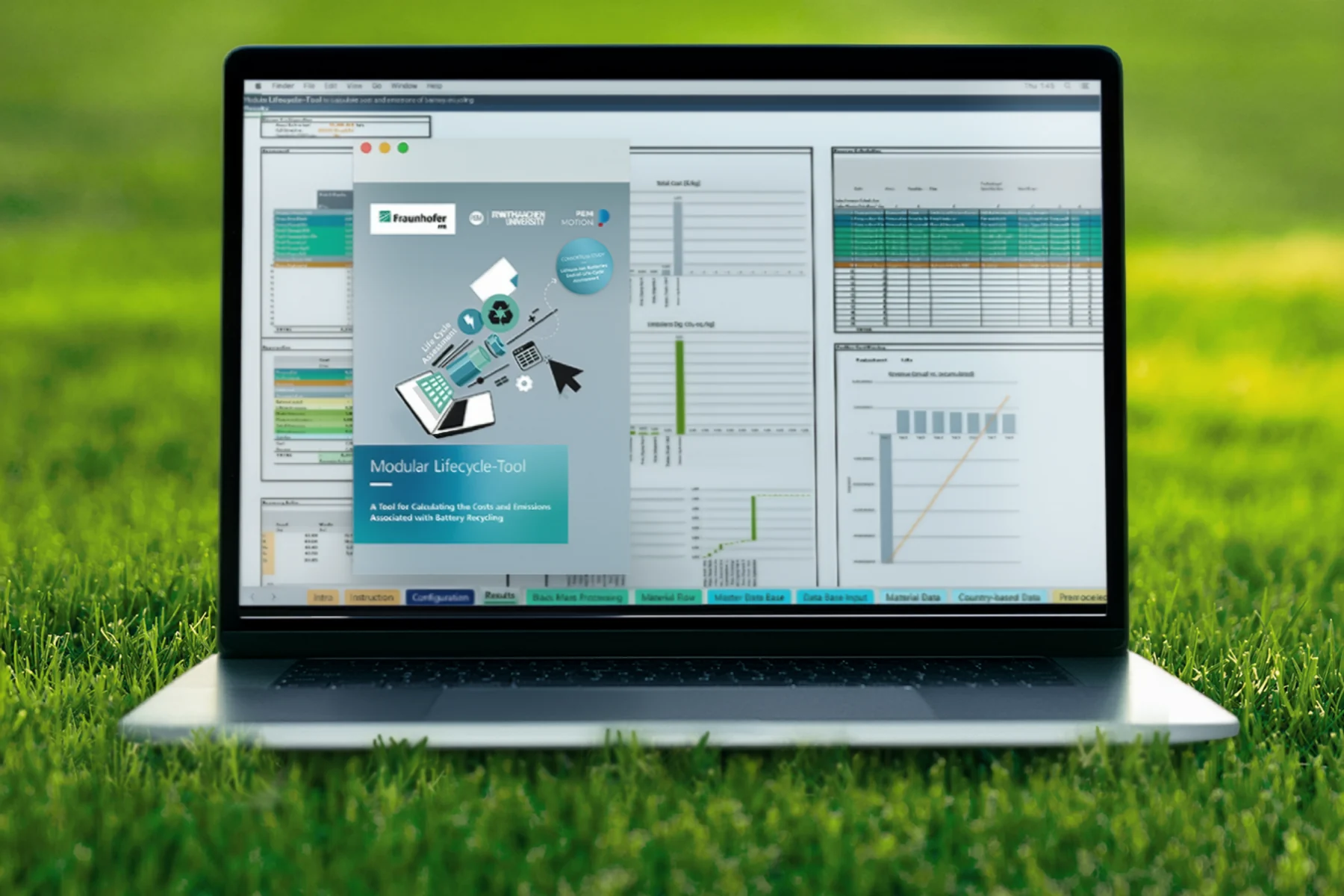
Fraunhofer FFB and RWTH Aachen University have developed an evaluation model for the recycling of lithium-ion batteries. It allows different processes to be compared in terms of their costs and CO₂ emissions.
The calculation model is designed to help recycling companies, technology providers and battery manufacturers evaluate different recycling processes on a uniform basis – both economically and ecologically.
A recent study by the EU research project Safeloop highlighted the significant economic challenges in battery recycling. According to the findings, recycling lithium-ion batteries in Europe under the examined conditions currently results in an average loss of around €1.90 per kilogram of battery pack. The researchers identified hazardous goods transport, disassembly and uncertainties in material recovery as key cost drivers.
The new Fraunhofer model focuses on evaluating individual recycling processes. Available methods differ not only in terms of energy consumption and recovery rates but also in how early-stage decisions impact the quality of recovered materials and the effort required in subsequent stages. To capture these relationships, the tool divides the entire recycling chain into individual areas, process steps and technologies using a modular principle. For example, different shredding processes can be compared, and their effects on the further recycling process can be analysed.
The tool is based on a database containing information about individual process steps. Users can specify parameters such as material throughput and the composition of the batteries to be recycled, then compile customised process chains.
The model tracks material flows throughout the entire recycling chain and links them to economic and ecological key performance indicators.
Source link