
The Vorarlberg-based Obrist Group gained notoriety primarily thanks to headlines about Teslas retrofitted with combustion engines in the frunk. Now, three of the company's development subsidiaries, burdened with approximately €31.8 million in debt, face immediate closure. Here are the reasons the company cites for the insolvency.
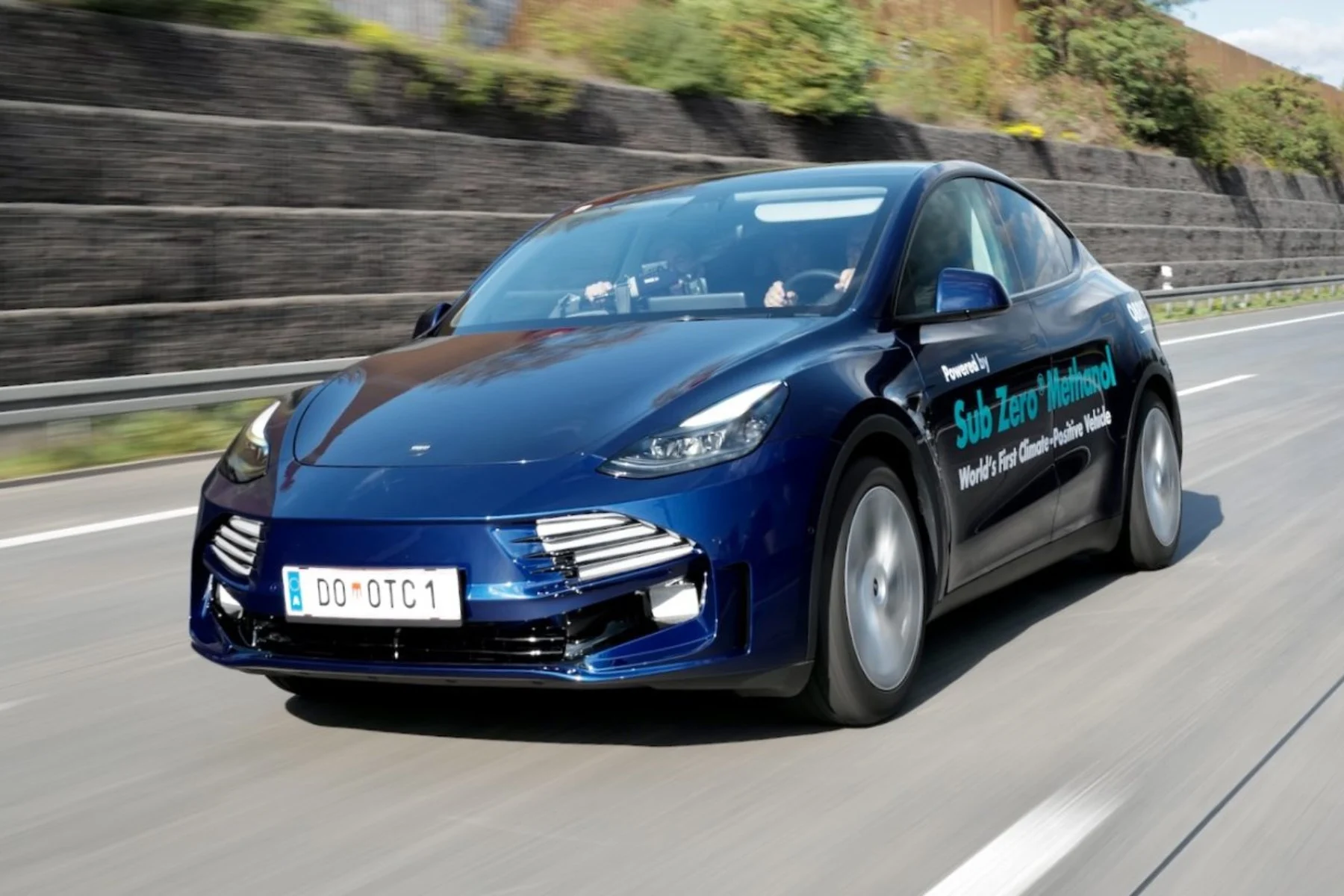
The Austrian development company Obrist has attracted attention in recent years with its unconventional test vehicles. The engineers converted battery-electric production models such as the Tesla Model 3 and, under the name “HyperHybrid”, installed a compact two-cylinder petrol engine as a generator in the frunk. The goal was to create a series hybrid with a smaller battery to reduce costs and weight.
Later, the Obrist Group expanded the concept to include processes for producing synthetic methanol from atmospheric CO₂. Despite ambitious announcements about major projects and series licences, the company failed to bring a production vehicle to market or secure long-term customers in the automotive industry.
At the end of September 2026, economic collapse occurred before the Feldkirch Regional Court: separate bankruptcy proceedings were initiated for the Vorarlberg subsidiaries Obrist Powertrain GmbH and Obrist Technologies GmbH. Together with the also insolvent German subsidiary Obrist DE, the total debts of the three entities amount to approx. €31.8 million euros. Specifically, for the Austrian subsidiaries at the Feldkirch Regional Court, the debts of Obrist Powertrain GmbH amount to around €18.85 million, and those of Obrist Technologies GmbH to about €6.08 million.
According to the insolvency applications, restructuring is ruled out, and operations will be immediately closed and liquidated.
Source link