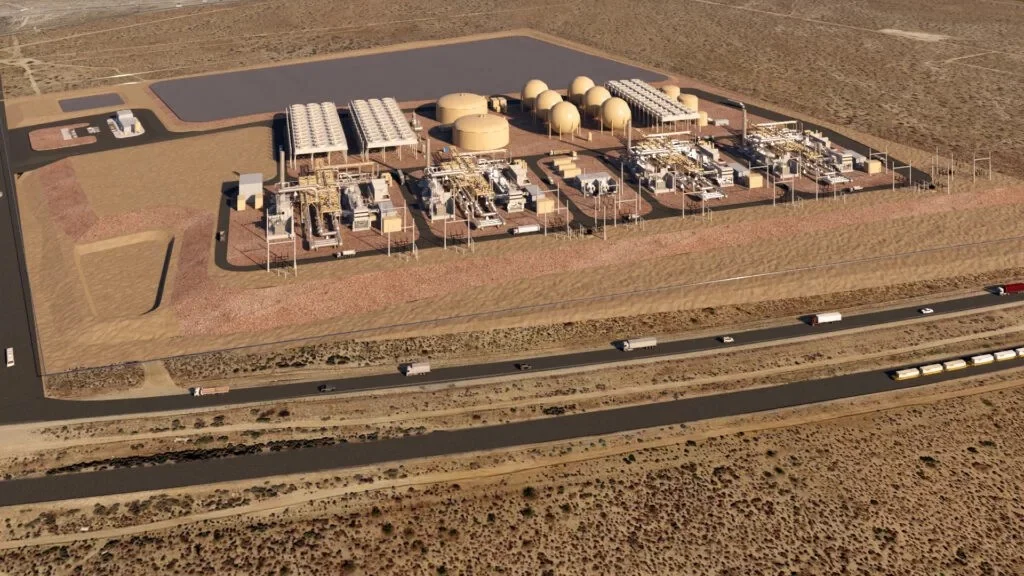
The A-CAES technology being developed by Hydrostor is similar but uses thermal management and hydrostatic pressure to operate cleanly and flexibly, making it a lot more efficient than traditional CAES. A-CAES still compresses air to store energy and releases it via a heating medium, but the technology captures the heat generated during the charging process instead of venting it to the atmosphere. This heat is stored in overground thermal storage tanks and used as the fuel in the discharge heating process, eliminating the need for natural gas.
The air in A-CAES is stored slightly differently to CAES. Where CAES stores energy in natural rock salt caverns, A-CAES can store air in different hard rock caverns that have been artificially made into the rock body. Inside these caverns, a water head is used to enhance land density and maintain the system at a constant pressure.
When it’s time to discharge the energy, the water head weight is released, and the cavern is flooded with water. This pushes the air to the surface, and it is recombined with the stored heat, expanded, and sent through the turbine to create electricity.
When it’s time to charge, the introduction of compressed air to the cavern displaces the water upwards into a surface reservoir (ready for release again when there’s a need to discharge). In essence, the water acts as a kind of piston. So, while the technologies are similar in principle, they actual everyday function is different.
The cavern in A-CAES maintains a moderate pressure of 75bar, and the installation of one these systems require a one-time fill of water to create the water head.
Source link