Researchers at Chalmers University of Technology in Sweden have assessed how much reconfigurable battery packs could extend EV battery life and reduce lifetime cost. The study, published in Nature Communications, was carried out with PHINIA and Scania.
Battery packs in EVs consist of many interconnected cells that do not age in the same way. In a conventional pack, the weakest cell can therefore set the limit for the entire pack.
Albert Škegro, a doctoral student at Chalmers and the study’s first author, explains the problem by picturing the cells connected by a rope while they all try to move forward. “Since they are bound to each other, everyone has to keep the same pace as the slowest cell and stop when that cell stops,” said Škegro. “With the solution in our study, the battery can instead bypass the cell that is causing problems and continue forward.”
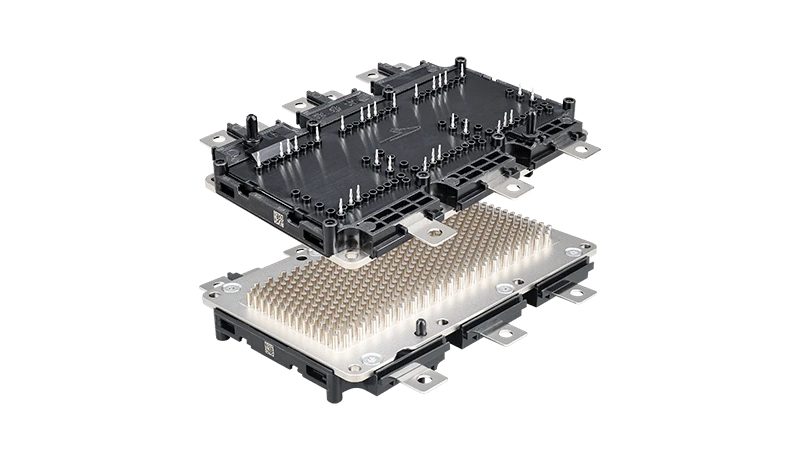
In a reconfigurable pack, switches and control systems can change the connections between the cells. The researchers say that in their models, controlling each cell separately could extend battery life by over 20% in some high-voltage vehicles, such as electric trucks and long-range cars. In practice, groups of cells are more likely to be controlled together, so that figure is a theoretical upper limit.
In one example, the researchers modeled a typical 80 kWh battery in a car driven 12,000 km per year and assumed a conventional pack would be replaced after 10 years. In the model, the reconfigurable pack reached that replacement point after about 11 years, roughly 14 months later.
Source link