They’re cheaper, created faster, with tech that echoes Tesla and Rivian, but they differ in interesting ways.
“GM is committed to EVs for the long term. One in four cars sold around the world is an EV, and that number is only rising. We’re not walking away from that; we’re embracing it. When the U.S. market is ready for EVs in large numbers, we’ll be there.”
That’s GM president Mark Reuss, reaffirming his company’s commitment to creating and selling electric vehicles “built for mainstream adoption” in volume. His remarks came Wednesday at GM Forward, a sprawling press event in New York City in which the company laid out its future technology road map.
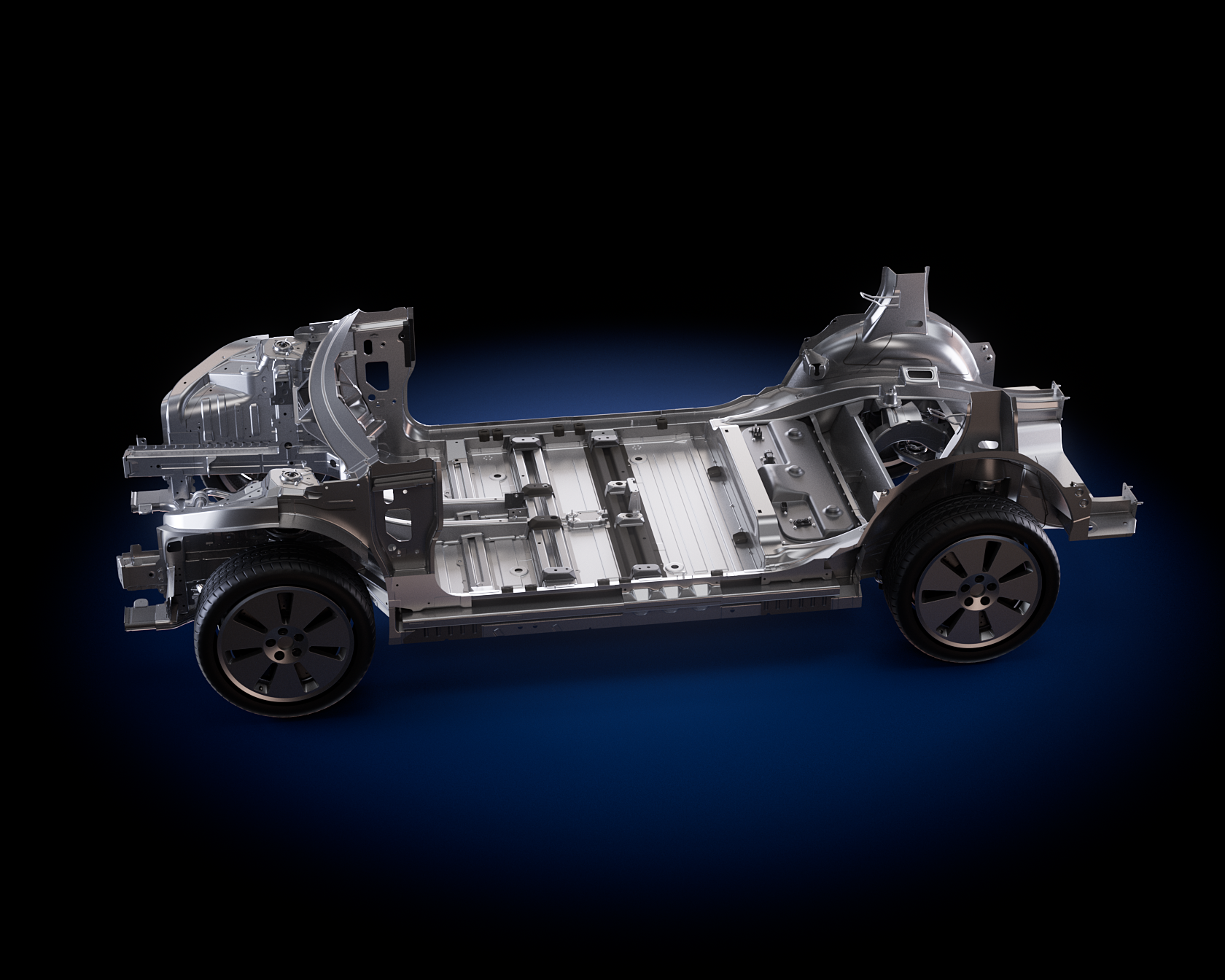
GM’s new Gen 4 EV architecture will underpin what Reuss called “a remarkable set of vehicles, in several segments.” He declined to specify dates, prices, ranges, or models, though he and other execs underscored that multiple EVs will come in “mainstream” segments. That includes small and medium crossover utility vehicles, the heart of today’s U.S. car market.
The Gen 4 EVs will ride on a new “skateboard” architecture, powered by LMR (Lithium Manganese Rich) batteries to be built in volume starting in 2028 at the Ultium Cells plant in Spring Hill, Tennessee. GM claims its LMR cells have energy density close to today’s nickel-manganese-cobalt-aluminum (NMCA) cells, at costs that approach much cheaper lithium-iron-phosphate (LFP) cells. They will first go into the current full-size EV trucks from Chevrolet and GMC.
While the Gen 4 EV architecture accepts multiple cell chemistries, Zach Walker, GM’s director of global EV architecture, told Car and Driver the new chemistry is proving to have more high-end capability than projected.
Source link