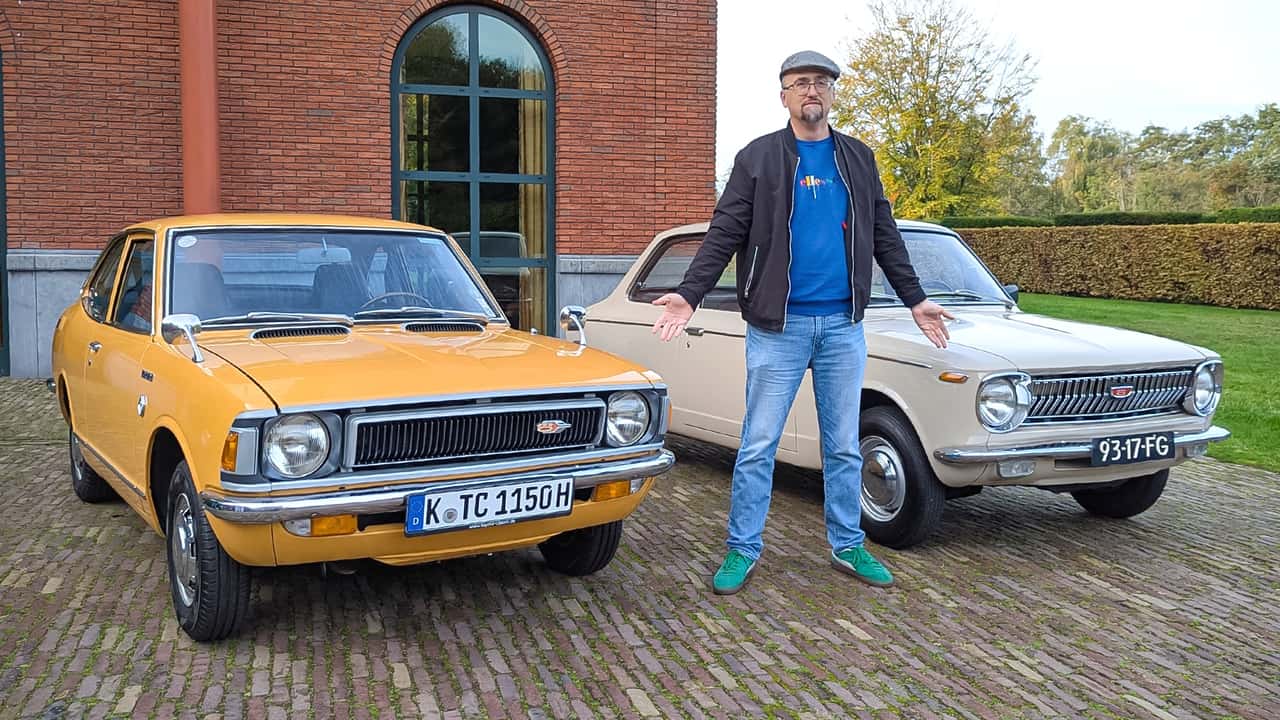
With more than 57 million units sold and 12 model generations, the Toyota Corolla is widely regarded as the best-selling car in the world. At least among vehicles wearing the same name on the trunk. In case you didn’t know, “Corolla” comes from the Latin term for the wreath of petals around a flower, often considered its most beautiful part.
The Toyota Corolla is found in nearly every country on the planet, and its model history since 1966 is so varied that only true specialists can track every detail. Customers, however, have largely cared about something else: rock-solid reliability, strong quality, and fair value for money.
In the early 1960s, Japan was experiencing rapid economic growth, much like Western Europe. As the population grew and cities stretched into new suburbs, more and more Japanese people wanted an affordable car of their own.
Nearly every major automaker already offered small cars at the time. But the new middle class wanted something a bit more substantial. Toyota responded to this social shift with a new kind of vehicle, developed under chief engineer Tatsuo Hasegawa and built at the newly constructed Takaoka plant.
The Corolla's story began with the first generation (E10 series, 1966–1970), which debuted in Japan in November 1966. With a modern, sporty design, a 1.1-liter engine producing 59 hp, disc brakes, and a four-speed manual transmission with a floor-mounted shifter, it made an immediate impression.
Corolla exports to the United States, where Toyota had been active since 1958, began in the summer of 1968 with prices starting at $1,668.
Source link