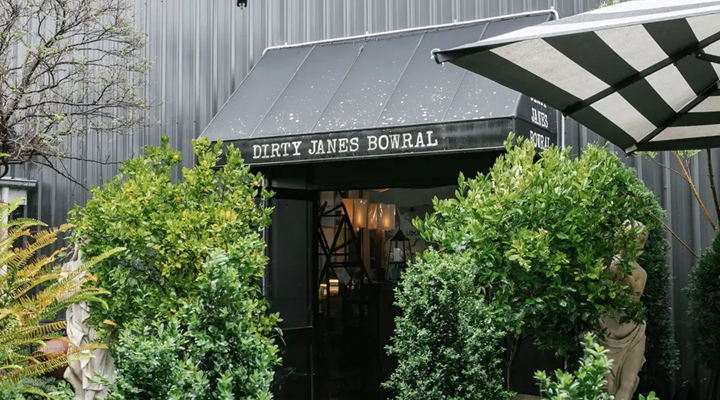
When Jane Crowley was asked how a higher GST would land at her business, Dirty Janes, a collection of vintage emporiums, she began counting the businesses inside her business. In fact, there are 250 small enterprises and artisans represented by the vintage emporium, and many operate outside the GST register.
“Theoretically, if GST were to be raised, even by 1 per cent this will have a big impact on Dirty Janes,” she told Inside Retail in response to a fiscal proposition to lift the GST from 10 to 15 per cent.
Earlier this month, the Australian public policy think-tank, The Grattan Institute, published a report which called on the federal government to increase GST from 10 to 15 per cent, extending to all food, including basic groceries currently exempt from the tax.
The institute proposed some substantial offsets, estimating $76 billion raised annually would fund $33 billion in income tax cuts, $25 billion in welfare increases and about $18 billion for state budgets.
Explaining the pressure behind the proposal in The Conversation, Grattan Institute researchers Matthew Bowes and Erin-Lea Brown wrote that GST revenue flowing to the states has fallen from 3.7 per cent of the economy in 2007 to 3.3 per cent in 2025. Grattan calculates that the poorest 40 per cent of households would perhaps come out ahead once the tax cuts and welfare increases are included.
However, for retailers such as Crowley, a lot would depend on whether customers felt they had more to spend once higher prices were factored in.
Source link