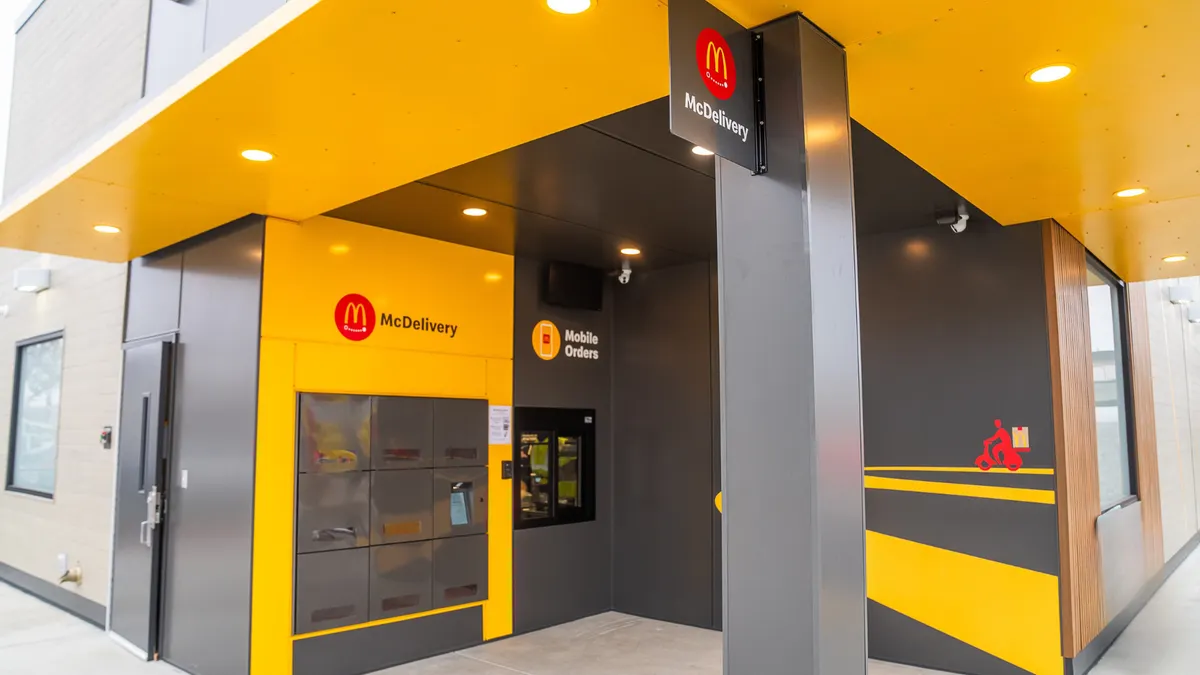
The ever-expanding big-box store is giving way to something smaller. Across the retail and restaurant sectors, brands are trimming their physical footprints, trading flagship-sized locations for compact formats built around how customers shop and eat today. E-commerce, delivery and buy-online-pickup-in-store have reduced the floor space a brand needs to serve the same customers, and rising real estate costs have made the decision easier. Department-store and grocery names from Macy's to Whole Foods are formalizing small-format concepts they once treated as experiments, while restaurant operators from Portillo's to Jack in the Box are rolling out prototypes that cut square footage without cutting volume.
A smaller box doesn't come with smaller revenue expectations. If anything, the pressure to extract more value from every square foot has intensified. That's pushing retailers and restaurant operators to rethink what a shrinking footprint can do, and it's turning store design and construction into a real competitive advantage.
The first response to a smaller footprint is design efficiency: flexible fixtures, multi-use zones and layouts that serve multiple functions throughout the day rather than a single static purpose. That's necessary, but for a growing number of brands, it isn't enough on its own. The more ambitious move is to turn part of their footprint into a second revenue stream through a store-in-store, or "shop-within-a-shop," concept.
The idea is simple to describe and much harder to execute — a second, distinct brand operating inside an existing store, sharing the same four walls but running as its own retail environment.
Source link