The mall is thriving. Here's what's driving its success and why it matters to retailers.
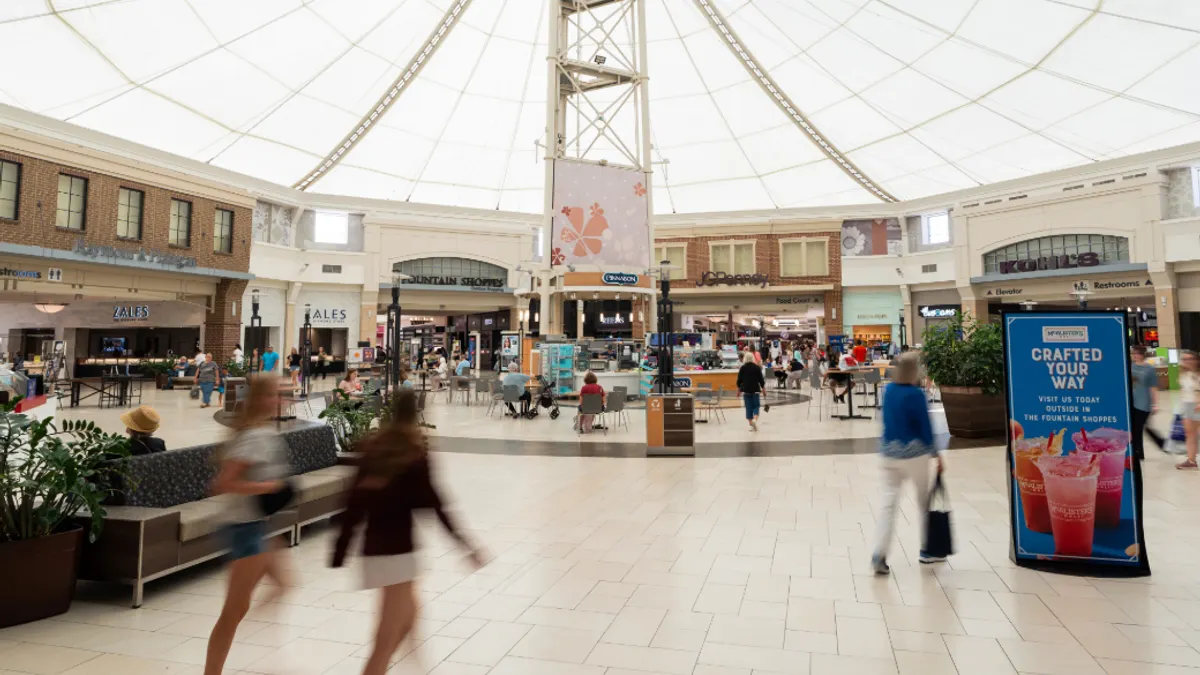
When you study the places people return to, patterns emerge. The most successful shopping centers are doing what great retail destinations have always done: giving people compelling reasons to visit, explore and return. Today, those reasons extend well beyond shopping. It's dining, entertainment, fitness, services, and a carefully curated mix of brands, all working together to give a destination a reason to matter to the consumer at 9 a.m. and again at 9 p.m.
Here’s the counterintuitive part: in an era defined by convenience, it’s the richness of the in-person mix that’s setting the pace. The results are visible in performance. Green Street reported that traffic at A- and B-quality malls rose 1% year over year in the first quarter of 2026. Its data also estimates that A-quality malls generated approximately $930 in sales per square foot in 2025, with sales productivity growing about 3% annually over the preceding decade. These are meaningful signals of the staying power of high-quality retail real estate. Translation: quality centers aren’t just hanging on, they’re pulling ahead.
Not all shopping centers offer the same proposition. Location, trade-area demographics, tenant mix, reinvestment commitment, and day-to-day operations can dramatically shape the experience for shoppers and the opportunity for retailers. In other words: same square footage, very different outcomes.
That distinction isn't a vibe. It's measurable. S. mall inventory yet account for 60% of mall retail sales. Their share of sales has increased eight percentage points since 2019.
Source link