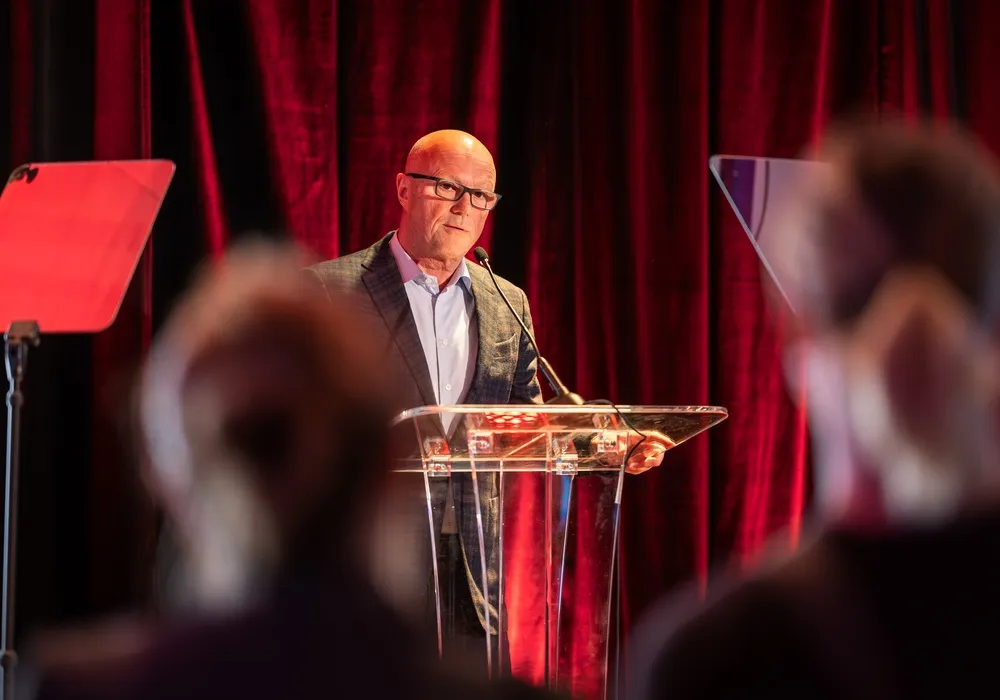
“If the problem looks bad, trust me, we haven’t seen the worst of it yet.”
That was Patrik Frisk, CEO of French “materials regeneration” company Reju. Holding court at a reception at the Vancouver Art Gallery during Textile Exchange’s conference last month, Frisk spoke of a problem the fashion industry hasn’t quite grappled with yet, namely, where does all the stuff it creates go?
Add to that the fact that textile collectors, sorters and recyclers in North America and Europe are struggling with the exponential rise of cheap, low-quality garments—to the point where selling prices no longer cover operational costs—and the entire system is on the verge of a complete and irrevocable breakdown, making what Frisk describes as the “waste gap” an ever-widening chasm.
Related Stories

Recover Pushes Recycled Cotton Adoption with 'Real' Campaign
Brightfiber Halts Amsterdam Fiber Production Amid Funding Shortfall
“The tide gets bigger every year,” he said. “If we wait for it before we start to build some sort of a seawall, we’ll probably be too late.”
On Tuesday, Reju revealed it has been laying the first stones of its own seawall. Behind announcements of full-scale textile-to-textile recycling facilities in Sittard-Geleen, Netherlands; Rochester, N.Y.; and Lacq, France, the company has been working with six mills to develop fabrics that will accelerate the integration of its regenerated polyester into the global textile supply chain: A. Sampaio, RDD Textiles, Swisstex Direct, Tintex Textiles, FOV Fabrics and Utenos Trikotazas.
Source link