Philippine fashion and lifestyle label Rags2Riches overhauled its business fundamentals to stay afloat after nearing collapse in its ninth year, preserving livelihoods for hundreds of community weavers.
Co-founder Reese Fernandez-Ruiz warned staff at a December 2016 gathering that the enterprise faced potential closure, prompting an internal pivot toward disciplined financial management and self-sustained operations.
The company, which launched with a P10,000 donation transforming factory scrap cloth into rugs, had expanded by 2013 to engage more than 900 artisans across Payatas, Tondo, Caloocan, and Sucat.
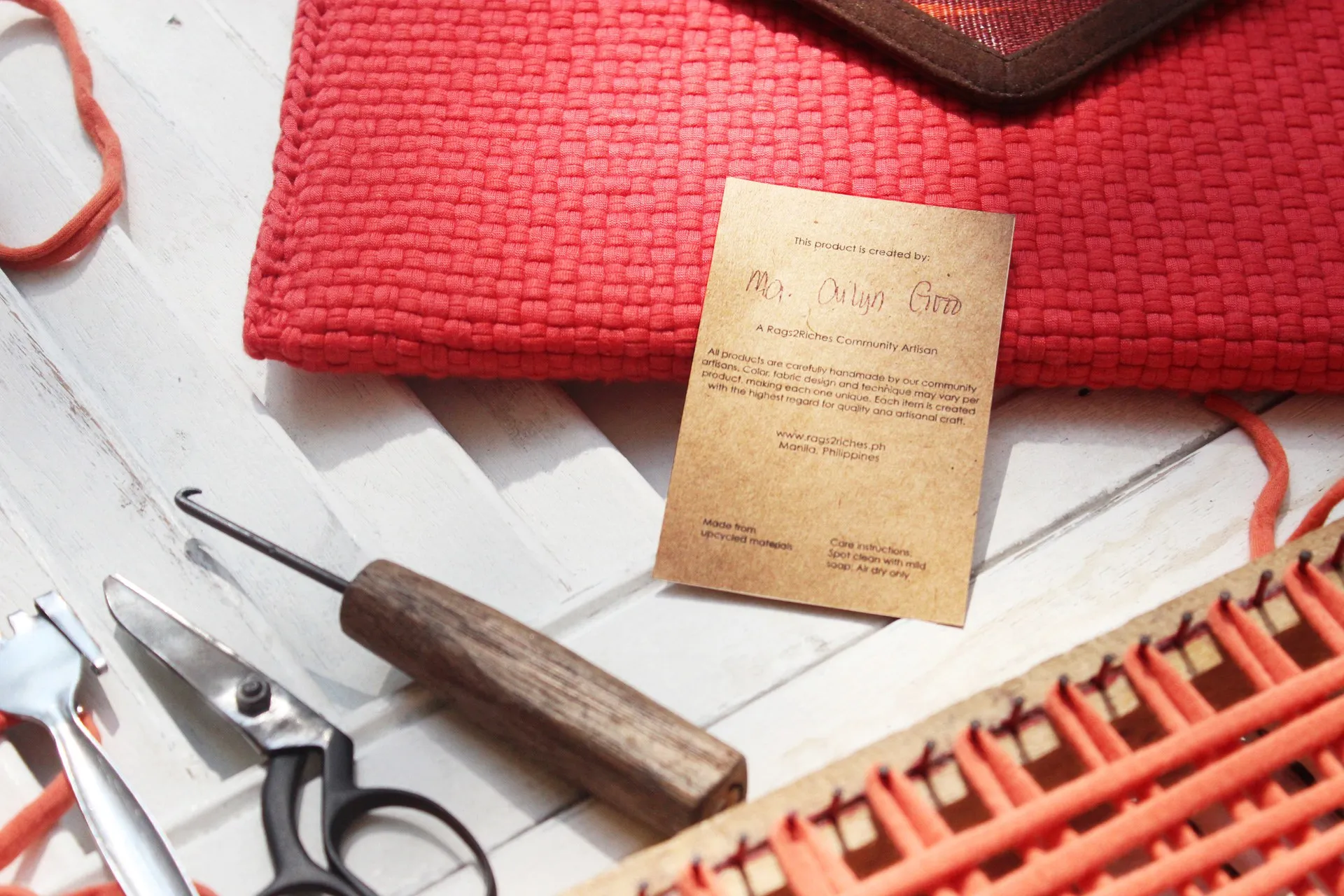
Rags2Riches operates a decentralized production footprint designed around domestic labor constraints. Most early artisans were mothers unable to work conventional factory shifts, prompting the business to divide manufacturing into home-based piecework and centralized finishing.
Weavers produce designated panels at home during fixed daily windows, then send finished panels to local community centers for inspection. Certified pieces travel to an assembly workshop for final stitching into bags, apparel, and home goods.
Production compensation shifted substantially under the structured schedule. Weavers previously earned between 12 and 16 pesos for a full day producing 10 foot rugs under merchant middlemen. Under the formal brand setup, two to three hours of assembly yielded 350 to 500 pesos daily by 2013, supplemented by automatic savings accounts via CARD Bank, micro-insurance under CARD’s CaMia unit, and mandatory three- to six-month vocational training cycles.
Commercial viability hinged on shifting customer demand away from charity purchasing toward design-led buying. Filipino fashion designer Rajo Laurel joined as an initial unpaid design adviser two months after foundation, followed by collaborations with Amina Aranaz-Alunan, Oliver Tolentino, Olivia d’Aboville, and furniture designer Kenneth Cobonpue.
Source link