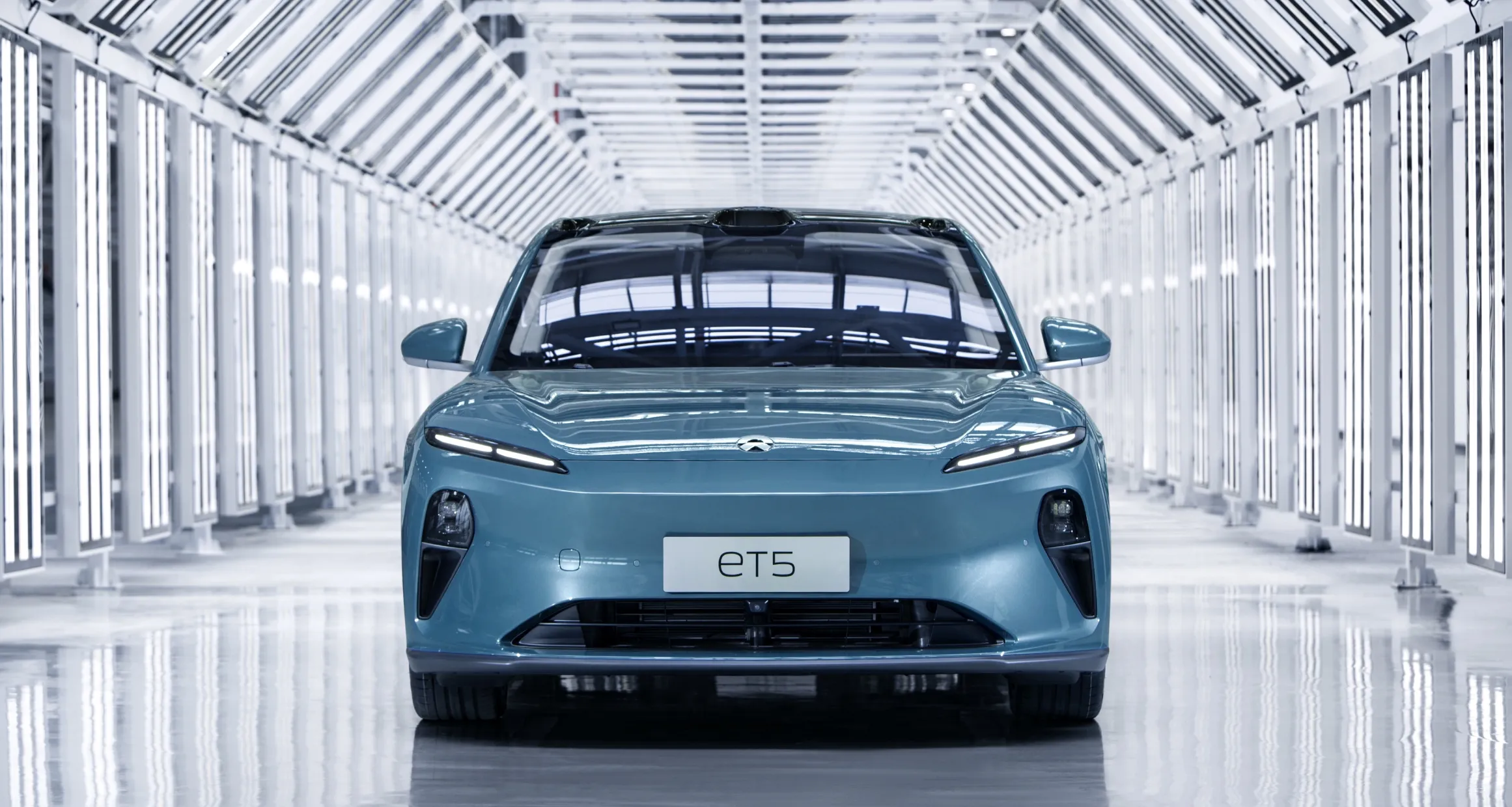
Nio opened six fifth-generation battery swap stations across Guangdong on Sunday. The launches brought its provincial network to 500 sites, pushing cumulative swaps past 17 million.
Guangdong generated roughly 13 percent of all battery swaps completed by the company across China. Meanwhile, local vehicle deliveries rose 76.3 percent year-on-year through August.
Guangzhou, Shenzhen, Huizhou, Dongguan, Foshan and Zhuhai all added stations simultaneously. Each facility runs on fifth-generation architecture built to cut swap times and handle multiple vehicle platforms.
Resident numbers in Guangdong reached 129 million in 2025, keeping it China’s largest provincial economy. Nio Power shifted its provincial focus from basic geographic expansion toward tightening urban station density.
Expressway corridors form a central pillar of that footprint. The company operates 101 swap stations along Guangdong expressways, including the Shenyang-Haikou Expressway, the Beijing-Hong Kong-Macao Expressway and the Pearl River Delta Ring Expressway. Drivers have logged over 3 million swaps along those routes.
Heavy capital spending makes dedicated swap networks costly to build. Still, Nio uses station density to anchor vehicle sales against competitors who rely purely on public plug-in chargers. Price wars remain fierce among electric vehicle makers in southern China, turning operating convenience into a key sales differentiator for premium brands.
Commercial landlords and transport operators gain recurring high-voltage power demand and steady driver footfall from swap installations. Yet asset utilisation carries real risk. Fixed machinery and battery inventory costs remain high, requiring strong daily turnover to break even.
Station density gained momentum after an early 2025 rollout. Under its Power Up Counties program, Nio Power reached full county-level swap coverage across Guangdong in April 2025, installing 428 stations across all 122 county-level administrative areas.
Source link