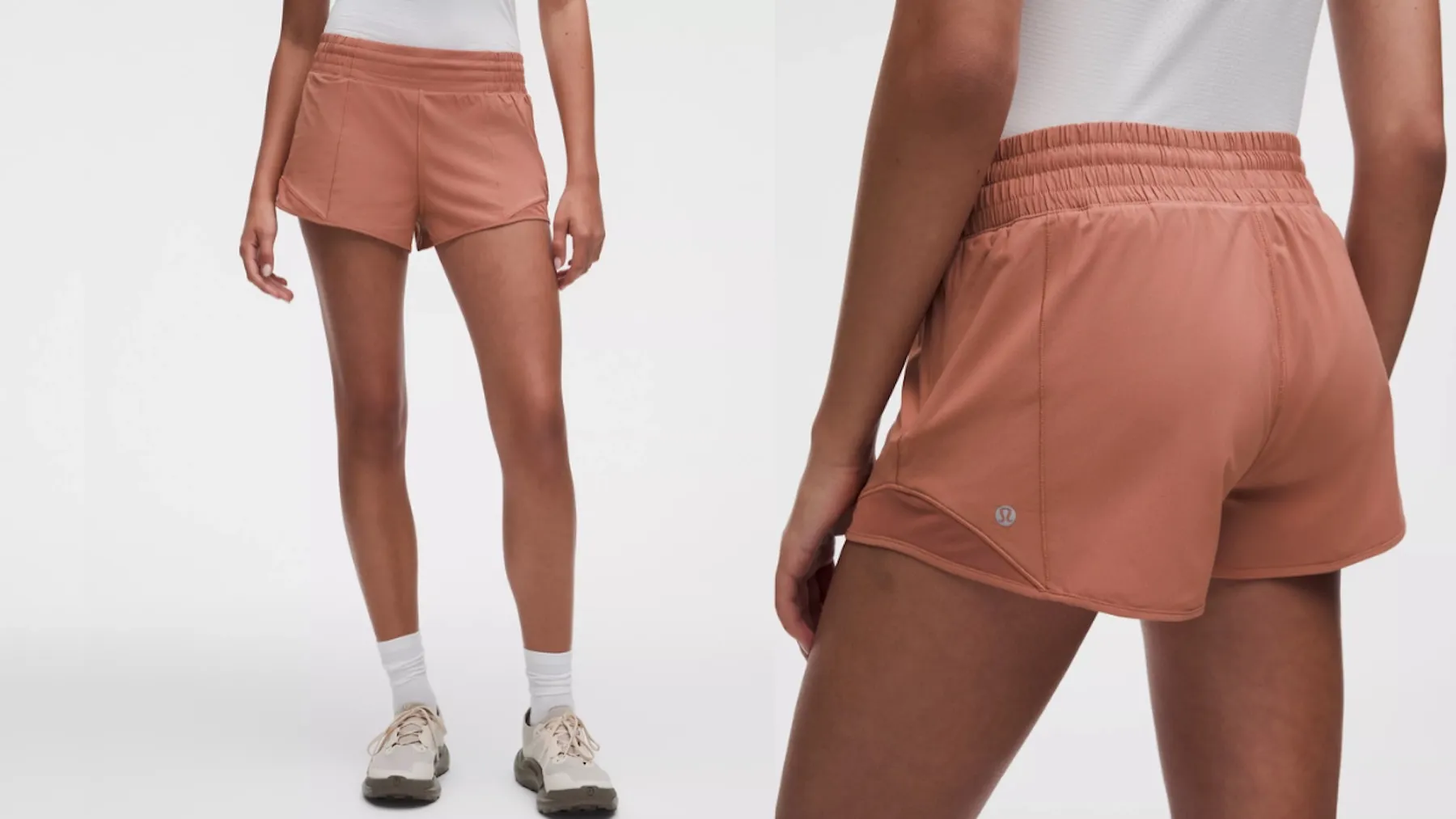
Lululemon has introduced enzymatically recycled polyester from Australian recycler Samsara Eco into two of its core running shorts in a limited launch in Australia and New Zealand.
The capsule includes the Hotty Hot High-Rise Lined Short with a 2.5-inch inseam and the Pace Breaker Linerless Short with a 7-inch inseam, both in the shade Canyon Rock.
“Material progress is part of how we define performance,” said Yogendra Dandapure, Lululemon’s chief materials scientist. “Advancing circular innovation takes long-term collaboration, testing and learning across the value chain.”
Related Stories

Newlight, Prime Polymer Tackle Polypropylene Dyeability
Lululemon Faces Investor Suit Over Turnaround Claims
Lululemon said enzymatically recycled polyester accounts for at least 50 percent of each finished product’s weight and is used in the body fabric. Their product pages identify the body fabric as 86 percent recycled polyester and 14 percent elastane. Both styles retail for 89 Australian dollars ($61).
“Lululemon backed us early, and each launch helps us learn more about how our technology can integrate into existing supply chains. Moments like this help pave the way for broader adoption of enzymatically recycled materials,” said Lars Kissau, Samsara Eco’s general manager.
In 2025, the companies announced a 10-year plan for Samsara Eco to supply Lululemon with recycled polyester and nylon 6,6. Lululemon said the materials could eventually account for about 20 percent of the fibers it uses.
Samsara Eco’s process uses engineered enzymes to break down plastics into their molecular building blocks, or monomers. Those molecules are purified to remove dyes and other colorants, then used to make new plastic.
Source link