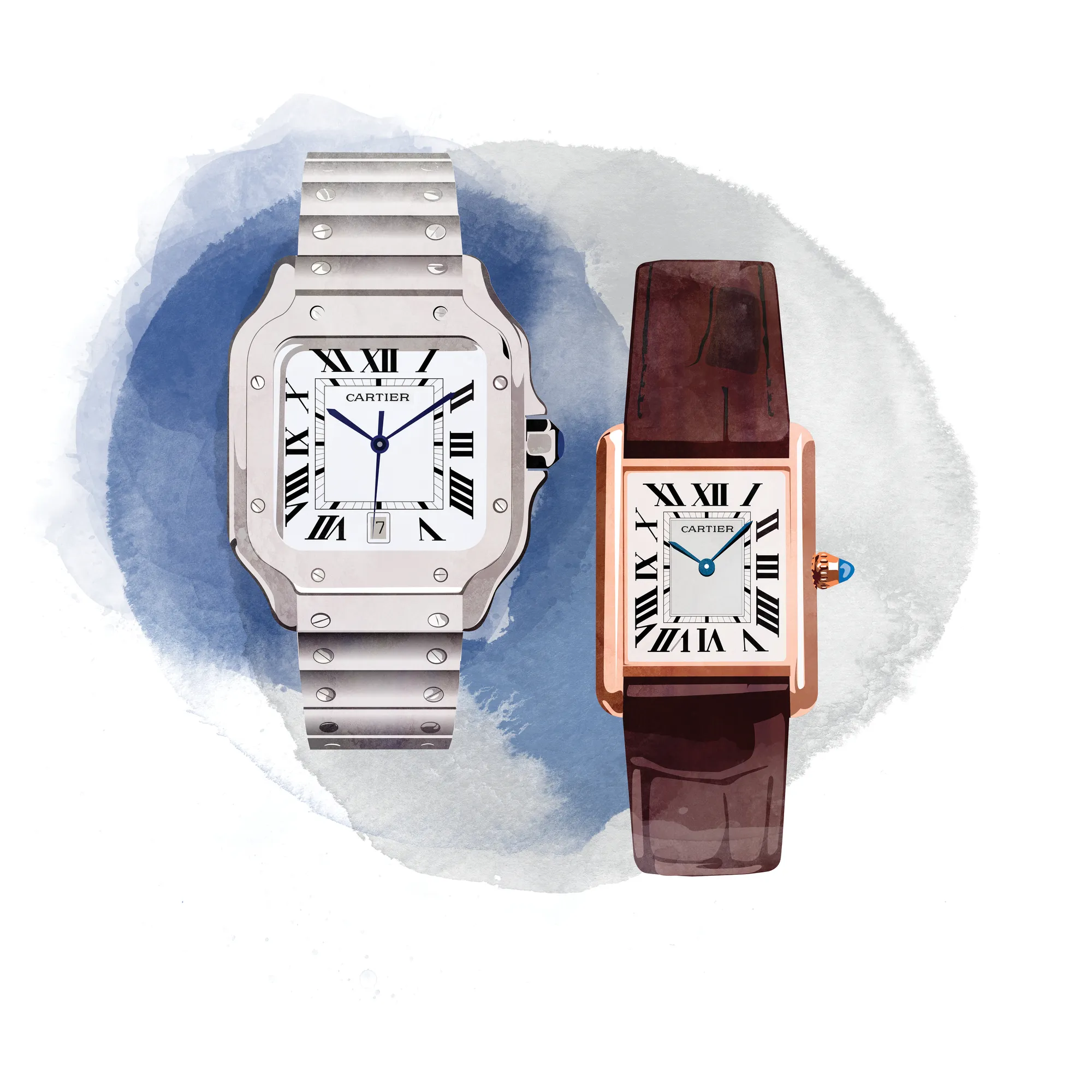
The house is receiving the WWD Honor for Watch Brand of the Year for turning its history and knack for striking designs into engines of desirability and growth.
Even by the standard of its long history, Cartier’s current run in watchmaking is one for the books.
At 179 years old, the Paris-based house is estimated by industry sources to be the world’s second-largest watch brand by sales.
Even more remarkably, Cartier has appeared more resilient than much of Swiss watchmaking through a pandemic-fueled boom and correction, against a backdrop of geopolitical and macroeconomic upheaval.
It has done so by solving the ultimate equation in heritage luxury: staying visible without losing its aura of elegance, commanding premiums for rare models at auction without becoming inaccessible, and tapping its archive while attracting a younger clientele.
For 2025, the annual report published by Morgan Stanley and specialized firm LuxConsult placed Cartier’s sales at almost 3.5 billion Swiss francs — 695,000 watches at an average price of 6,100 Swiss francs. They estimated that sales grew 10 percent in value and 2 percent in volume, putting Cartier’s market share at 8.7 percent.
Appetite is visible at auction, too. In September, Sotheby’s Hong Kong sold a rare Cartier Cheich, awarded to Paris-Dakar Rally winners, for a record $3.4 million.
The broader secondary market is rising, too. A recent third-quarter report from Morgan Stanley and WatchCharts said Cartier’s price tracker reached a record high in September after six consecutive quarterly gains.
4 percent in the quarter, and 10 of the 12 tracked collections increased, including the Roadster and Baignoire designs leading.
Source link