Will your next pair of cotton jeans be made with hydroponics and AI?
That’s the vision shared by Spanish hydroponic-farming company Magtech and H&M Group’s Circular Innovation Lab. The organizations are working together to scale soil-free cotton production.
Martin Ekenbark, Circular Innovation Lab lead at H&M Group, said the process can address many of the challenges associated with conventional cotton production, including its use of water, nutrients and pesticides, as well as arable land that could otherwise be used to grow food.
Related Stories

Resale Sellers Are Going Full Time. Finding Stock Is the Hard Part.
Talk to My Agent: What Smarter AI Means for Amazon Sellers, Daydream Shoppers, and JD Sports
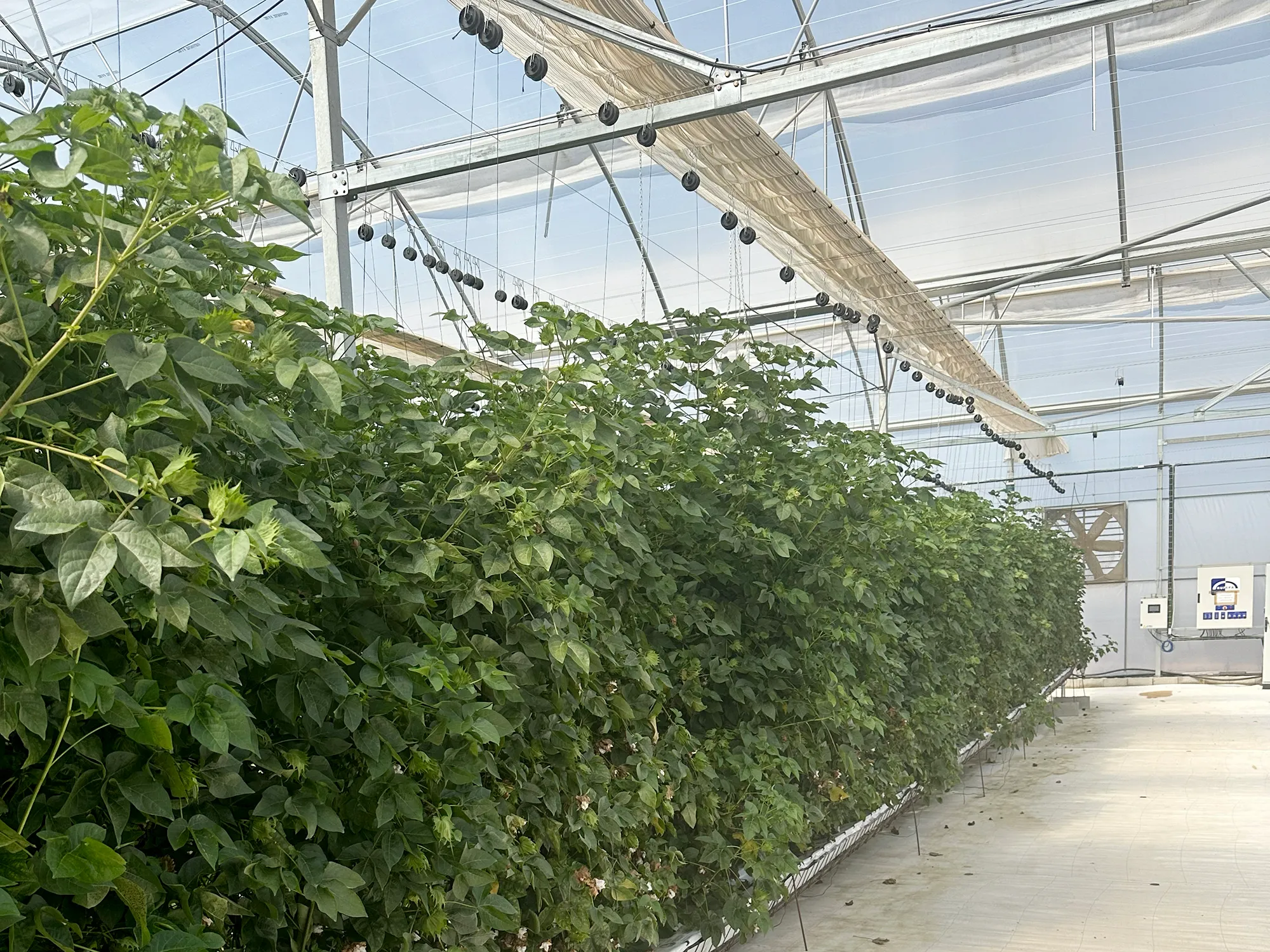
The project explores how hydroponic growing—which grows crops in water instead of soil—and AI can reduce cotton’s reliance on these resources. When cotton is grown hydroponically, the plant’s roots sit in circulating water and are fed a controlled nutrient mix. Plants are grown under net structures and water is recovered and reused.
The process is also adaptable, meaning brands can develop local supply chains. “You can basically set this up in a car park, on a rooftop, even in the desert. As long as there’s sun and a reasonable source of water,” Ekenbark said.
While previous trials by HKRITA and Materra have explored soilless and controlled-environment cotton, H&M Foundation said those efforts have mostly shown what’s technically possible, rather than how hydroponic cotton can become a scalable alternative to costly conventional growing.
“One hectare of our system contains approximately 30,600 plants distributed across 52 growing channels, each about 98 meters long.
Source link