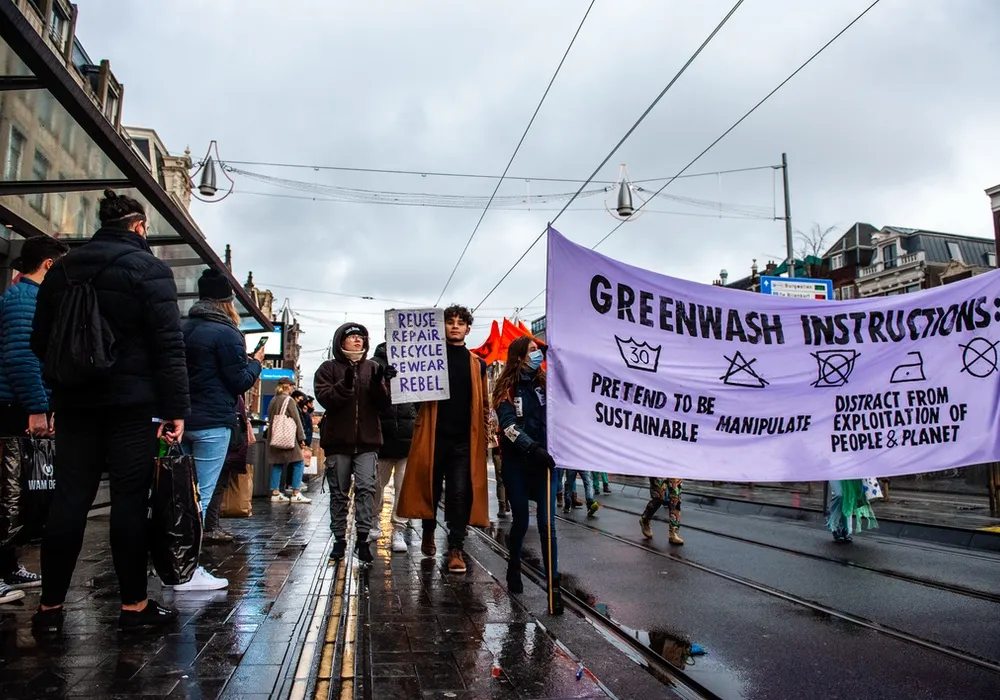
When the European Commission abruptly withdrew a proposed law targeting nebulous or unfounded corporate sustainability claims in 2025, saying it ran counter to the executive arm’s “simplification agenda,” environmental advocates feared it would open the floodgates to unchecked greenwashing. Their concerns, it seems, might have been premature.
On Sunday, the Empowering Consumers for the Green Transition Directive takes effect across the European Union, restricting vague assertions such as “eco-friendly” and “sustainable,” cracking down on climate claims based on carbon-offsetting schemes and reining in public and private sustainability logos that amount to self-certification.
Related Stories

Trump Threatens Tariffs as Canada Explores Deeper Trade Partnership With EU
Are EU's New Procurement Rules Missing Meaningful Human Rights Safeguards?
EmpCo, as the directive is also known, falls short of the Green Claims Directive’s full scope. It lacks the mandatory third-party verification and pre-approval process intended to prevent greenwashing before marketing statements reach consumers, for instance. Nor does it prescribe a standardized life-cycle assessment or other specific scientific methodology for companies to validate their environmental claims and make apples-to-apples comparisons.
By updating the Unfair Commercial Practices Directive to blacklist specific misleading marketing tactics, however, EmpCo could lighten the load for watchdog groups by rendering once-routine declarations off-limits. These include statements about recycled-material use that Nusa Urbancic, CEO of the Changing Markets Foundation, says fashion brands “love to use.”
“Our research showed that brands use these claims in misleading ways, for example claiming that the coat was made from recycled polyester, when in fact it was only the lining,” Urbancic said.
Source link