

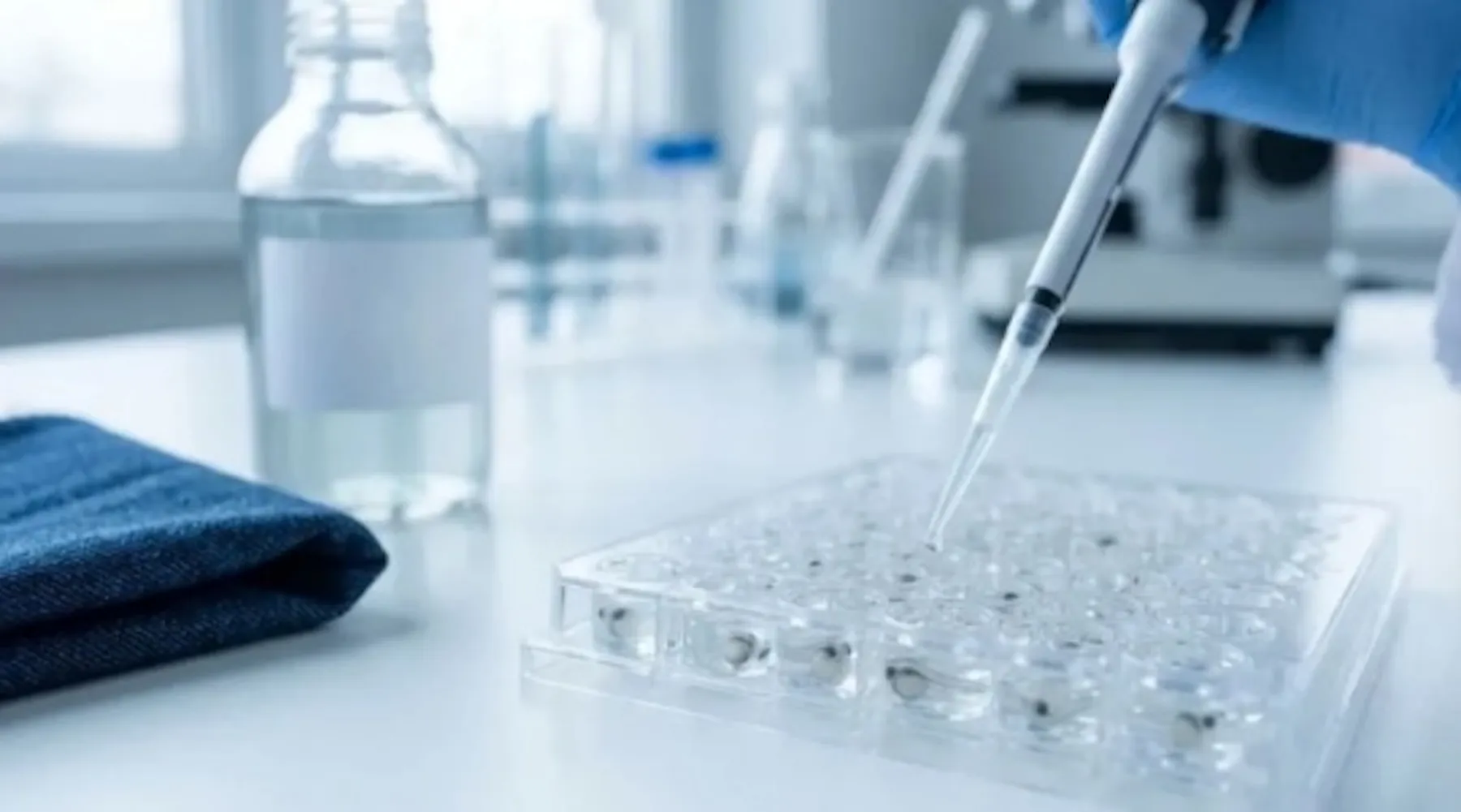
The country’s new textile discharge standard adds a requirement for certain dyeing and finishing operations to demonstrate that fish embryos can survive exposure to their treated wastewater, introducing a biological check alongside existing chemical limits.
The standard, GB 4287-2026, took effect Sept. 1 for new, rebuilt and expanded facilities. Existing facilities must comply from Jan. 1, 2028, though provincial governments may approve an earlier rollout. Published jointly by China’s Ministry of Ecology and Environment and the State Administration for Market Regulation, it replaces four 2012 standards covering dyeing and finishing, silk reeling, wool and hemp.
Related Stories

Homeland Security Gets New Tool to Track China's Forced Labor Risks
SJ Fall Summit: From China to Canada, How Trump's Tariff Agenda Keeps Fashion Guessing
The test uses newly fertilized zebrafish eggs exposed for 48 hours to a wastewater sample diluted to one-sixth of the test solution. At least 90 percent must survive at approximately 79 degrees Fahrenheit, according to the standard. Facilities subject to the strictest discharge-permit management must test at least every six months; other covered dischargers must test at least annually.
The added measure assesses the combined acute toxicity of treated effluent. Conventional tests track individual parameters, such as ammonia or a named metal, while the biological test measures the mixture’s effect on a living organism. The environment ministry said earlier textile standards lacked an overall toxicity control for dyeing and finishing wastewater.
For textile chemical management specialist Bluesign , the development supports a broader push to pair chemical input controls with biological testing of what leaves a factory.
Source link





