

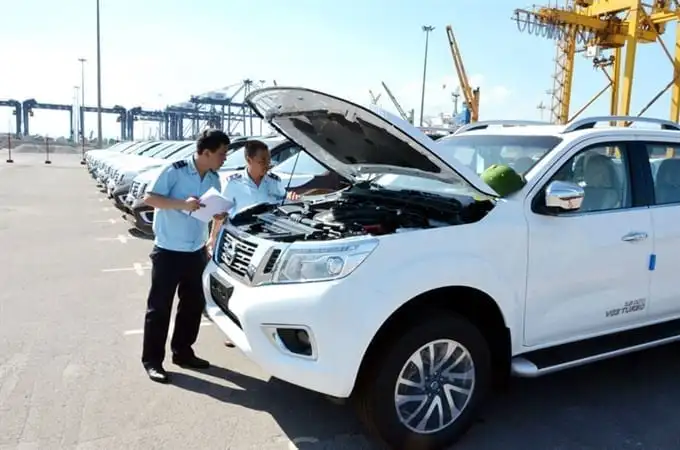
Asian automakers are expected to account for more than half of new vehicle sales in the United States in the third quarter, pushing Detroit’s Big Three down to a record-low market share of just over 36 percent.
According to Charlie Chesbrough, a senior economist at Cox Automotive, Asian brands are approaching record-high market share levels for the second consecutive quarter as consumers embrace hybrid vehicles over traditional petrol models.
General Motors saw its third-quarter sales drop 5.5 percent to 670,974 units, while Japanese rival Toyota rose 0.6 percent to 633,223 units. Ford retained third place ahead of South Korea’s Hyundai-Kia, while FCA US fell to sixth place behind Japan’s Honda.
The structural shift across American retail showrooms stems from product portfolio choices made half a decade ago. Japanese and South Korean manufacturers retained broad hybrid options across their core crossover and sedan lines, giving dealers immediate inventory when fuel prices surged. Toyota committed its top-selling 2026 RAV4 exclusively to hybrid and plug-in hybrid configurations, while Hyundai scaled petrol-electric systems across models ranging from the Elantra to the three-row Palisade.
Detroit carmakers chose a starker electrification route that left dealerships vulnerable. General Motors and Ford directed capital toward dedicated battery-electric vehicles such as the Equinox EV and Mustang Mach-E, while retiring fuel-efficient compact petrol vehicles like the Ford Escape. GM offers only one hybrid model in its domestic lineup, the Corvette. When higher pump prices pushed mainstream buyers toward economical alternatives, Asian brands had stock ready on showroom floors.
Retail dealership economics shifted rapidly after the 7,500 dollar federal electric vehicle tax credit expired last year, halting momentum for pure battery models.
Source link





