India's quick-service restaurants are implementing a Rs 99 price point to attract more customers. KFC, McDonald's, and Burger King are focusing on value meals and beverages to drive traffic. The Rs 99 meals aim to entice first-time visitors while creating upselling opportunities. There are concerns regarding the impact of lower average bills on overall profitability. The shift includes innovative approaches like vending pods and targeted advertisements to capture consumer interest.
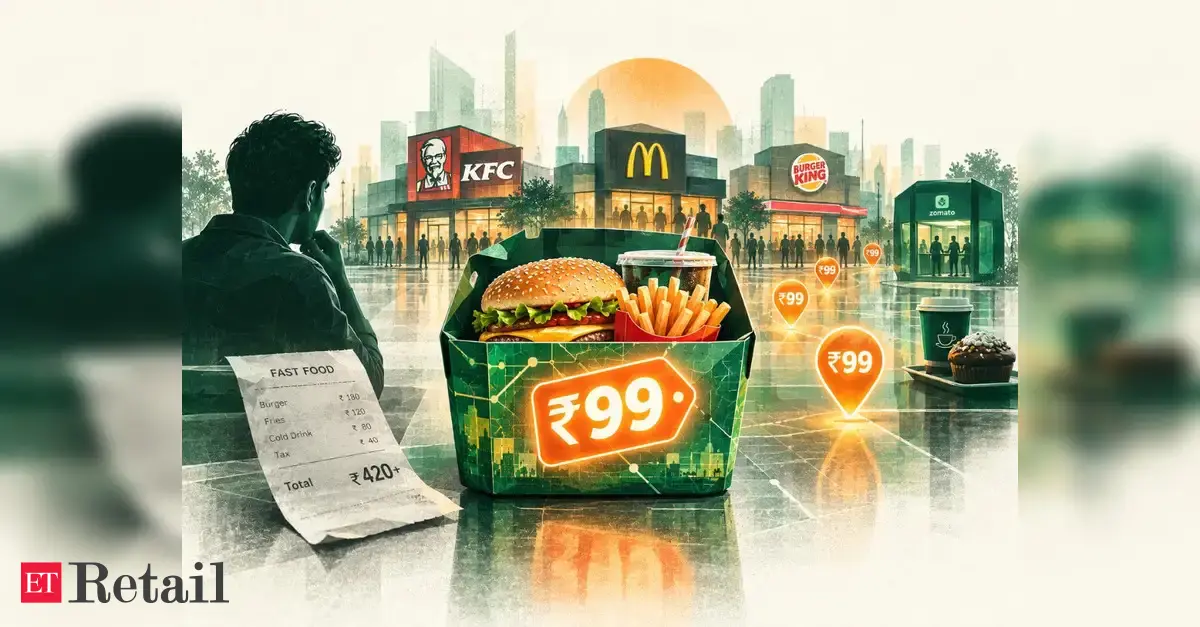
For a customer staring at a Rs 300-plus fast-food bill, the difference between “maybe” and “let’s order” can sometimes be a Rs 99 price tag. That is the price point India’s quick-service restaurants (QSRs) are increasingly chasing to make customers more willing to order. But is a Rs 99 price tag enough to win back a customer who has been staying away? After a period of subdued demand, India’s food and restaurant businesses are changing their pitch. KFC is using a Rs 99 meal to draw in first-time customers. McDonald’s is leaning harder on value meals . Burger King is building a ladder from Rs 79-Rs 99 offers to its core burgers and premium products. Zomato is testing fresh-food vending pods inside offices. And QSR chains are pushing coffee and beverages to create reasons to visit outside lunch and dinner. Advt
The common thread is not simply cheaper food, but reducing customers’ hesitation to order. But whether that customer’s “yes” lasts is another question. “The current recovery appears to be more volume/traffic-led than purely promotion-led, although value pricing has clearly acted as an important catalyst for customer recruitment,” said Chetan Mahadik, AVP - Consumer Discretionary, Systematix Group.
Source link