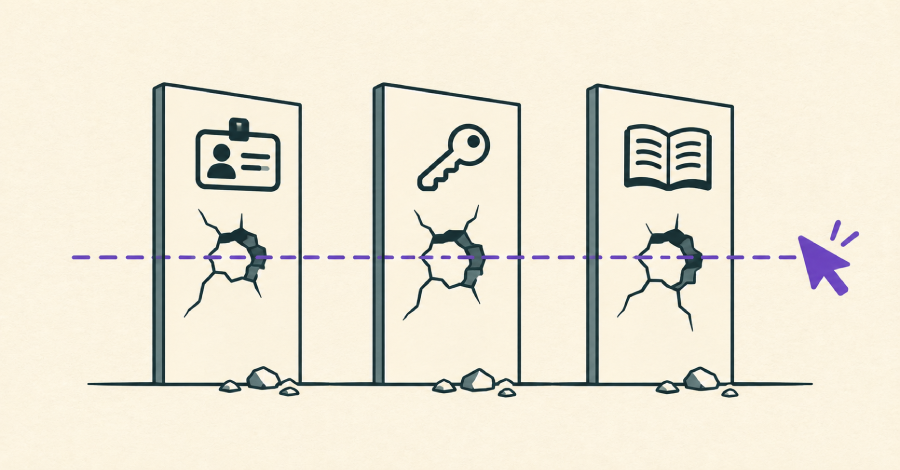
We tell customers three things about securing AI agents: they need their own identities, access that fits the job they’re given, and traceability that’s separate from any human’s. That was true for us at Token as well. Then, we built an agent that broke all three by default.
This helped us think through how such agents should be defended. When a browser agent acts inside a user’s authenticated session, the application may see the user but not the agent, the delegation, or the task’s intended scope. By creating an agent that breaks all the security rules, Token learned how companies should be using identity to gain control, especially as agent use scales. Standards are coming, but there are steps security teams can take today.
The agent we created is named Rehearsal. Its job is to answer questions inside the Token platform by doing rather than telling. It autonomously opens pages in the browser tab, sets filters, and fills in forms.
From a security perspective, it’s a typical UI agent that runs in the user’s browser. That’s what makes it useful. But it also means the agent runs within the user’s session and has their reach.
Moreover, to the server behind the page, the agent’s clicks are inherently indistinguishable from the user’s, because nothing in a session cookie points to who the session driver is.
Because Token owns both the agent and the app it runs, we can close each gap from the inside. For example, Token knows who’s driving the session because Rehearsal tells it who is.
Source link