A flaw in Broadcom's Wi-Fi setup software lets an attacker within radio range run code as root on Broadcom-based routers, without the network password or any pairing step, security researcher Quentin Kaiser disclosed on October 16.
He showed the attack working against home gateways supplied by three Belgian internet providers, in one case reading the Wi-Fi password off the device and in another opening a remote shell over the air. No CVE has been assigned to the flaw, and no fix has been deployed to the affected routers, Kaiser says.
The flaw is in Broadcom's version of Wi-Fi Protected Setup (WPS), the feature that lets a device join a Wi-Fi network without the password being typed in. Broadcom's code mishandles the reassembly of fragmented WPS setup messages, so an attacker in range can send crafted messages that corrupt the router's memory. From there, Kaiser built two things: a way to read memory back off the device, and a way to run his own code on it.
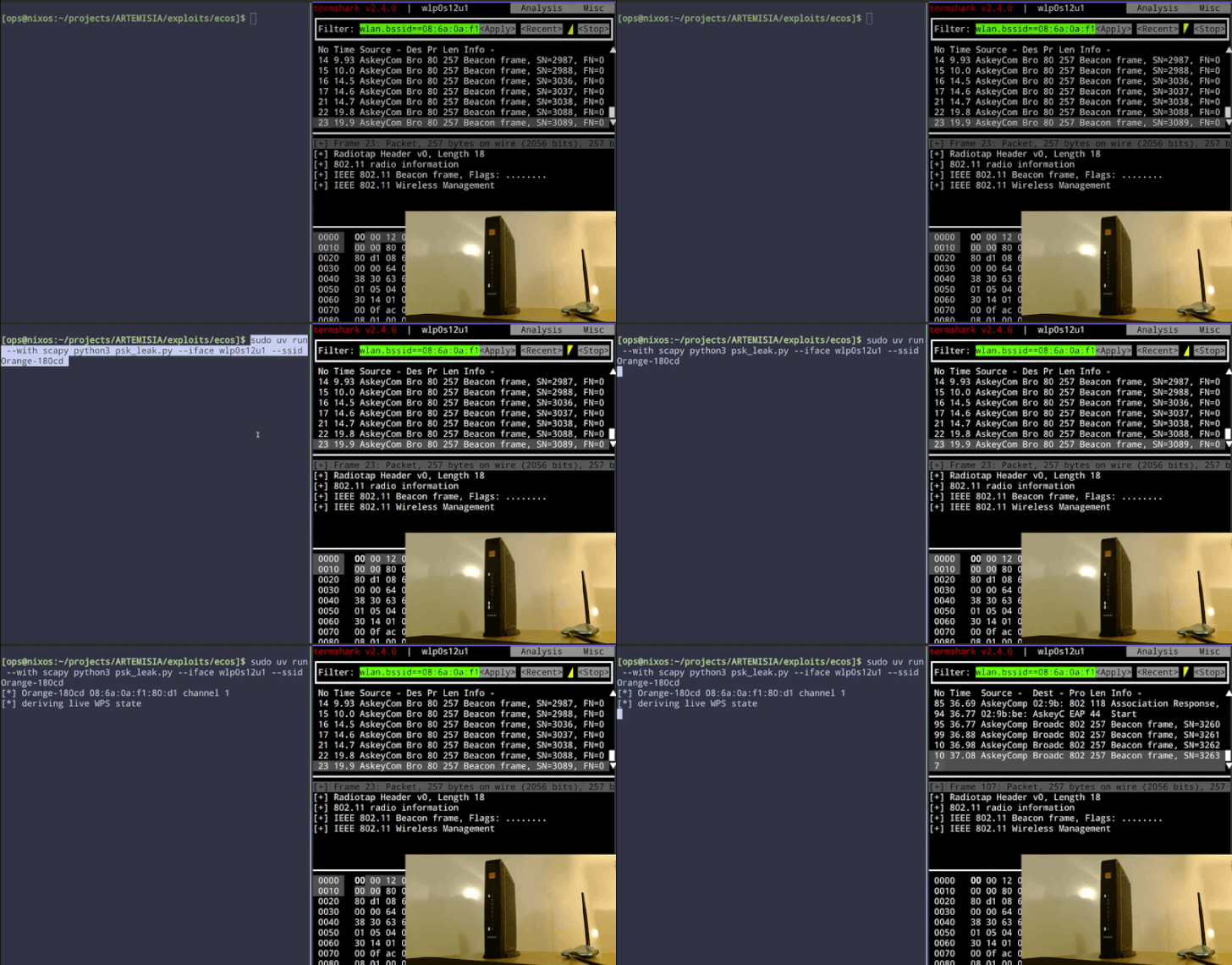
Against an Orange Belgium gateway, the Askey TCG3000 read the Wi-Fi password (the PSK) from the router's stored settings, sent it back over the air, and then joined the network with it.
Against a Proximus gateway, the Sagemcom-built BBOX3V+, the exploit opened a reverse shell, a remote command line, carried over Wi-Fi frames, so no outside server was needed.
Both ran without any login, and the attack works at a distance, not only up close, Kaiser says. He reports no real-world attacks using the flaw.
Source link