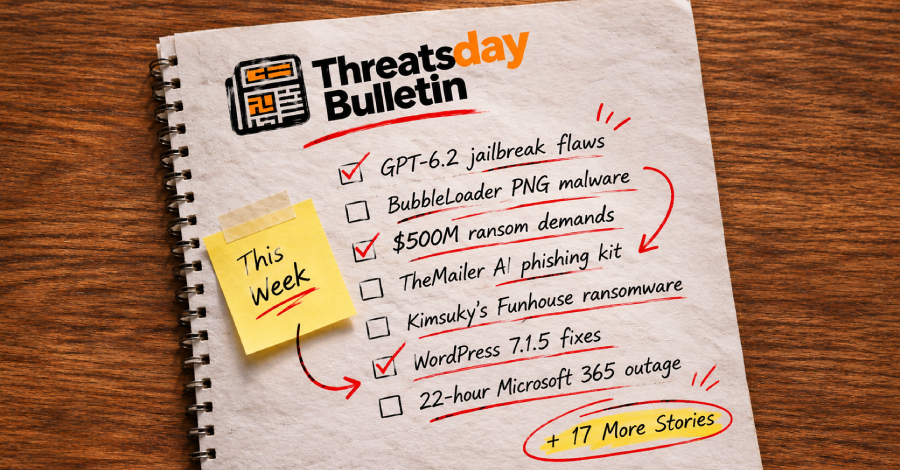
The easiest way to fool someone is to give them something they already expect. A job offer. A message about a service outage. A familiar app. Nothing looks strange at first. And that's the problem. This week's stories show how ordinary things are being used to steal data, spread malware, and get people to hand over access.
There's another shift worth watching. AI is making some attacks easier to run and harder to spot. Stolen data can now be searched like a shopping catalog. Phishing emails can be tested and rewritten until they get through. At the same time, researchers are finding that even powerful AI systems have safety gaps of their own.
And while everyone is watching the new tools, the old problems haven't gone anywhere. Third-party breaches, years of hidden spying, ransomware, and security fixes still need attention. Some stories are clever. Others are painfully simple. Here's what caught our attention this week.
The threats change every week. Subscribe, and we’ll alert you when each new ThreatsDay Bulletin is out.
Google has unveiled Gemini 4 Neon, its latest frontier model capable of delivering reasoning faster and more cost-efficiently. According to the company's DeepMind division, it also produces more secure code than Carbon across all easy, medium, and hard challenges on AutoBaxBench, achieving state-of-the-art on the hard tier (76%). "Neon for cyber delivers frontier-level performance across the code hardening lifecycle — vulnerability finding, validating, and patching — all while being faster and more cost-efficient than large frontier models," Google said .
Source link