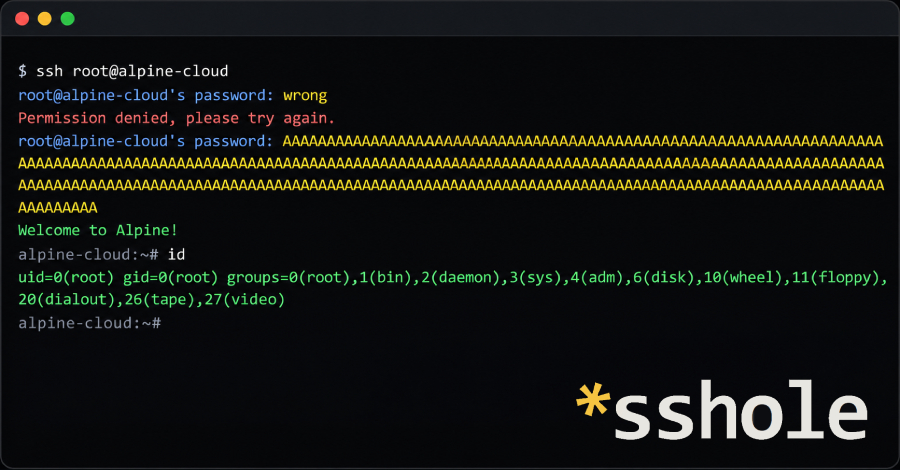
Attackers can log in to accounts that have no password, such as SSH key-only accounts, on some Alpine Linux servers running the standard openssh-server package. They need network access to the server, an account name, and a password between 257 and 1,024 bytes long.
OpenSSH, which rates the flaw critical, released version 10.6p2 today to block it. Alpine has published fixed packages for every release back to 3.16.
The attack works when the OpenSSH server (sshd) checks passwords without the Pluggable Authentication Module (PAM) interface, password logins are enabled, and at least one other account on the machine has a password. Alpine's openssh-server package is built without PAM, and password logins are on by default.
The flaw comes from how sshd works with musl, the C library that Alpine is built on. Non-Linux systems, Linux systems built on glibc, and systems that check passwords through PAM are not affected, said Damien Miller of the OpenSSH project.
He told anyone running an affected system to "set PasswordAuthentication=no or disable SSH for these systems IMMEDIATELY." No attacks using the flaw have been reported.
Alpine's security advisory lists four conditions. A server is exposed when all four are true:
The attacker also needs the name of an account with no password. One account with a password is enough to expose every account without one. The attack succeeds on every try with a single connection, according to the advisory.
Root is protected by the default PermitRootLogin prohibit-password setting and can be reached directly only if PermitRootLogin yes is set.
Source link