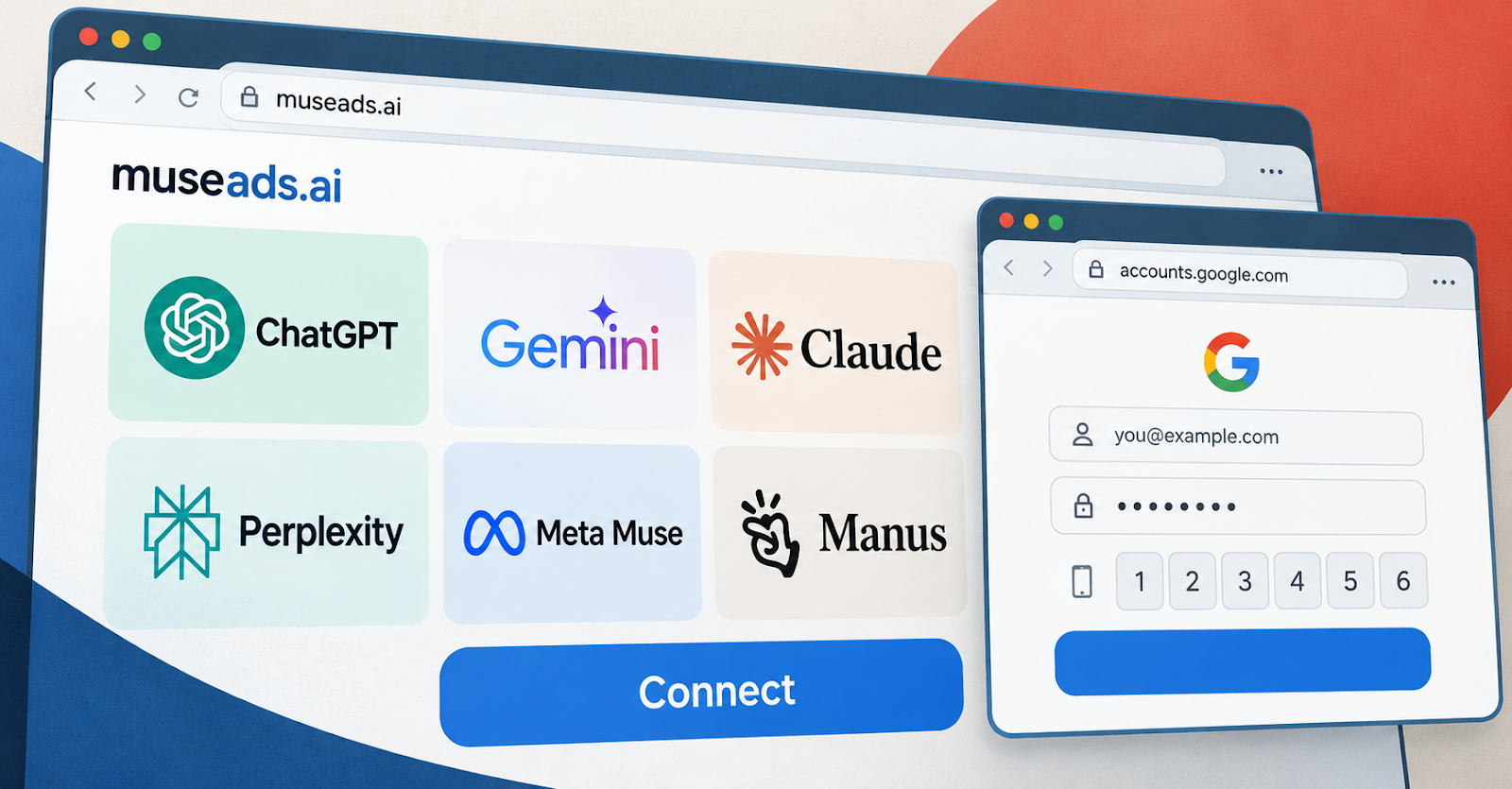
Cybersecurity researchers have disclosed details of a "human-operated phishing platform" that impersonates advertising products for artificial intelligence (AI) chatbots like Google Gemini, Anthropic Claude, OpenAI ChatGPT, Perplexity, Meta Muse, and Manus.
The products, which claim to offer campaign optimization, spend audits, and business-account connections, are designed with one goal in mind: to capture credentials and multi-factor authentication (MFA) codes via spoofed login windows using the browser-in-the-browser (BitB) trick.
"Each product was built around the same action: Connect," Island researchers Oleg Zaytsev and Ofek Ronen said in a report shared with The Hacker News. "Clicking it opened a browser drawn inside the real browser. The fake address bar displayed trusted origins such as accounts.google.com or an Okta tenant, while the real browser remained on the phishing domain."
"Behind the interface, the platform kept every password attempt, fingerprinted the device, and let an operator pick which MFA challenge the victim saw next."
One of the websites in question is "museads.ai," which emerged on September 16, 2026, a little over a week after Meta launched Muse, its AI agent designed for personal workflows. Described as "Your AI ads manager for paid media workflows," the platform claimed to help customers reach buyers, connect their ad accounts, and run sponsored placements.
Prominently placed in the spoofed web page is a Prompt Box with a "Connect" button, clicking which triggers a BitB attack to capture a visitor's account credentials for Google, Meta, TikTok, and Okta workflows. ]com).
Source link