Pillow, the most widely used image library for Python, can be made to run operating system commands on a server by specifying the name of a file it is told to open.
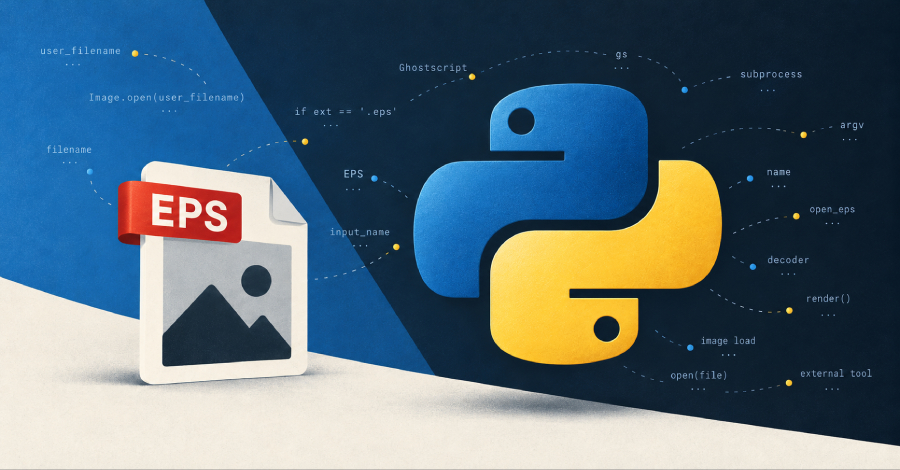
The flaw, CVE-2026-112900, is in the way Pillow handles EPS images, which it opens by passing the file's name to Ghostscript, a separate program it runs to turn the image into pixels, without checking the name first.
Ghostscript can read a name chosen by an attacker as instructions rather than as a file, and point it to a second file that carries commands to run. Pillow's maintainers fixed it in version 13.0.0, released on October 16.
Pillow turns up almost everywhere Python handles images: web upload forms, avatar and thumbnail tools, document and PDF pipelines, and most machine-learning projects pull it in. OX Security, the firm whose report drew attention to the flaws, estimates the library is downloaded about 436 million times a month.
Version 13.0.0 is a large security release, with fixes across four severity levels, from low to critical, two of which are rated critical by the maintainers. None of the flaws is known to be under attack.
The weakness is the filename, not the picture. "The flaw is triggered by the filename, not by anything in the PostScript document," the advisory says, meaning a harmless EPS file can still cause damage when an attacker sets its name. That makes upload endpoints that keep or build a stored file's name from user input the realistic target.
Source link