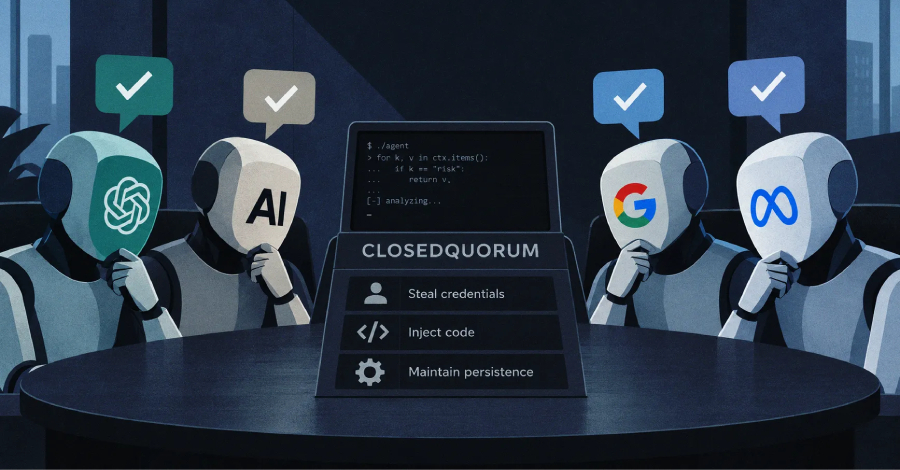
Autonomous security agents are getting good at finding bugs. Nobody has a good way to measure how good. Point one at a realistic target and what comes back is a report the agent wrote about itself: confident prose, a list of findings, and no way to tell which of them happened. Someone with a security background then sits down and checks every claim against the target. Which findings are real, which are duplicates, which are inventions, and, the question nobody has time for, what did the agent never try? That is a day of expert work for one run. Multiply it by three models, four prompt variants and ten repetitions, and the review queue is longer than the experiment.
XRanges for AI, built by CTF.ae, exists for that loop. It deploys realistic target applications with instrumentation baked into every service, records what an agent actually does inside them, and scores each run live on four independent signals. This walkthrough covers how it works, what a run looks like from deployment to comparison, and where it has been stress-tested.
Teams building autonomous pentesting or bug bounty agents tend to share a workflow. Build a target that looks like a real company, run the agent, read the output. The output is where it goes wrong.
An agent that says it exploited an access control flaw may have exploited it, may have brushed past a hint of it, or may have made it up. The report reads identically in all three cases. A report also only lists what the agent found.
Source link