

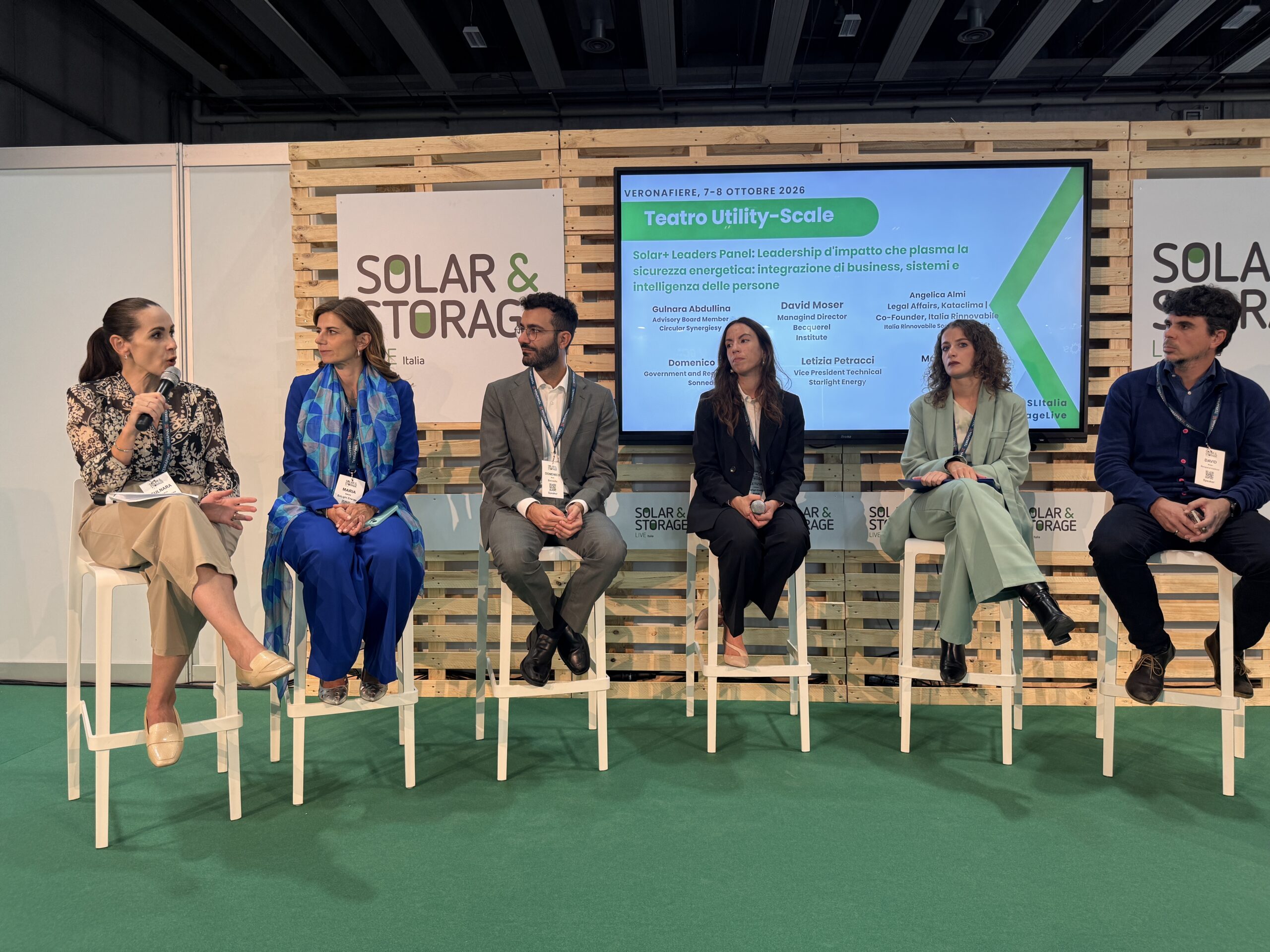
Solar plants are built to run for 30 years or more, yet the choices that shape those decades are often made in a matter of weeks, under pressure to hit pipeline targets. A panel organized by the Solar+ Leaders ecosystem at Solar & Storage Live Italia asked what it takes to lead with that long horizon in mind, arguing that resilience and energy security depend as much on the people who lead the sector as on the capacity they deploy.
A recurring theme was that much of a solar plant’s fate is sealed at the start. Letizia Petracci, Vice President Technical at Starlight Energy, part of the NextEnergy Group, pointed to Italy’s connection queue: requests for renewables exceed 300 GW, roughly four times the new capacity foreseen in the national plan to 2030. Since September, grid access goes to whoever obtains authorization first, not whoever applies first, which raises the stakes on choosing which projects to pursue.
Why does that choice weigh so heavily? Because, as Petracci explained, the developer is the first link in the chain: its decisions are inherited by those who build, finance and operate a plant for 30 years, and by the community that hosts it. In its first weeks, a project is cheap and still easy to stop; the further it advances, the harder it becomes to say no, not for technical reasons, but because pipeline targets loom and the time already invested feels wasted. The new rules sharpen the dilemma: developers must now move fast and carry projects all the way to authorization with no certainty of a connection.
Source link





