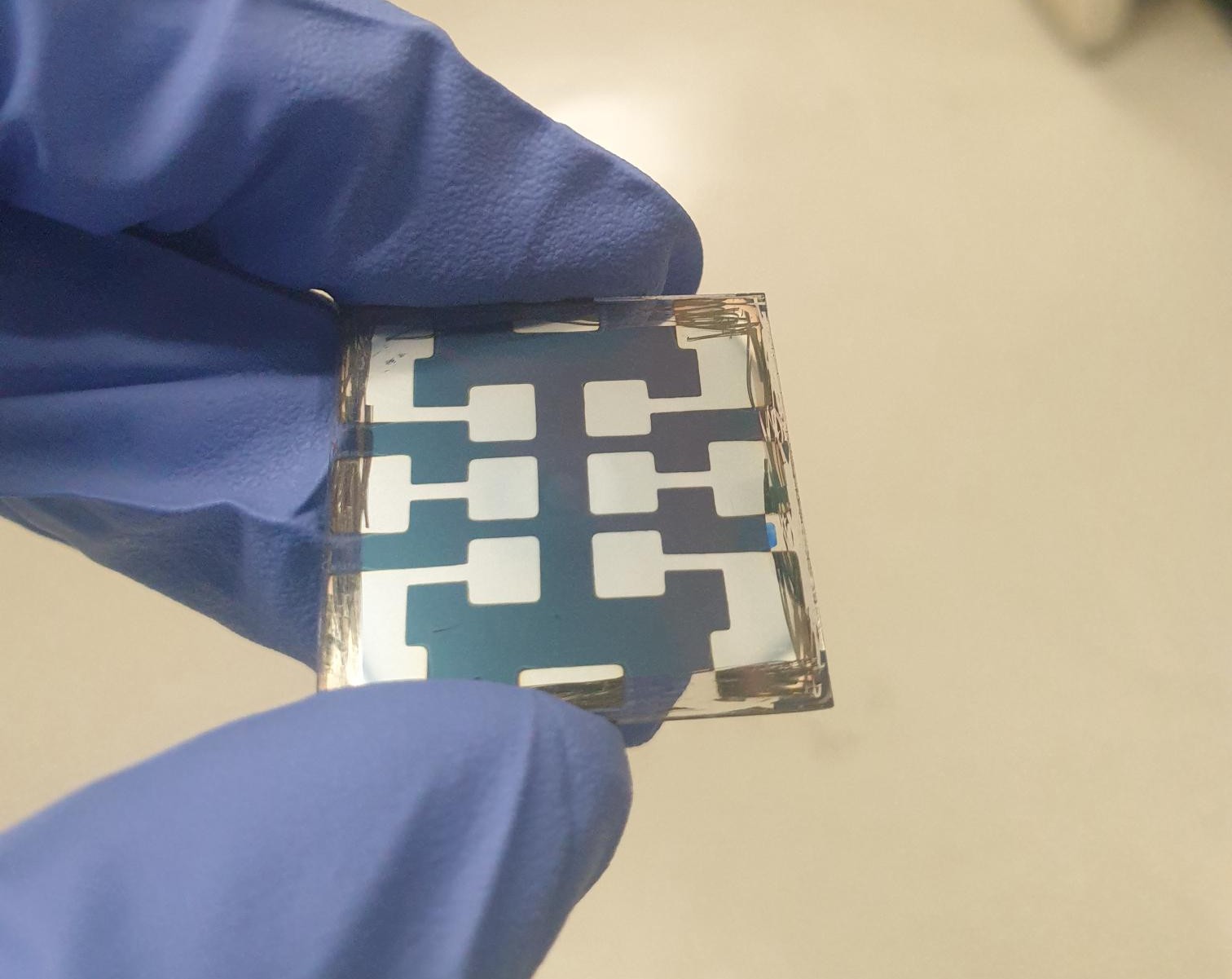
Researchers at the University of Toledo (UToledo) in the United States claim to have fabricated the most air-stable two-dimensional/three-dimensional (2D/3D) tin (Sn) perovskite solar cell to date as part of a research project aimed at identifying lead (Pb)-free perovskite materials for PV applications.
In 2D/3D perovskite solar cells, a 2D perovskite phase is combined with a conventional 3D perovskite absorber, typically at an interface or in a mixed-dimensional structure. The 2D layer can passivate defects, improve charge-carrier transport and extraction, and suppress ion migration. Cells incorporating 2D materials may also offer greater stability than conventional 3D devices due to the protective effect of their organic ligands.
The architecture may be particularly useful for lead-free tin perovskite solar cells, which continue to face stability challenges. A 2D/3D tin-halide perovskite device unveiled in 2025 achieved a certified efficiency of 16.65% and operated stably under continuous illumination for more than 1,500 hours. Such architectures could therefore help improve the stability of lower-toxicity tin-based absorbers, although their stability benefits are not exclusive to lead-free perovskites.
“Tin perovskites are considered the leading lead-free alternative, but a key drawback is that tin oxidizes readily when exposed to oxygen and moisture. Our research is significant because it points to a potential solution to this major challenge for tin-perovskite photovoltaics,” the research lead author, Jiahao Xie, told pv magazine.
“In general, Pb-based perovskites are currently more cost-effective than Sn-based perovskites because the lead source materials are less expensive than their tin-based counterparts,” said co-author Lei Chen.
Source link