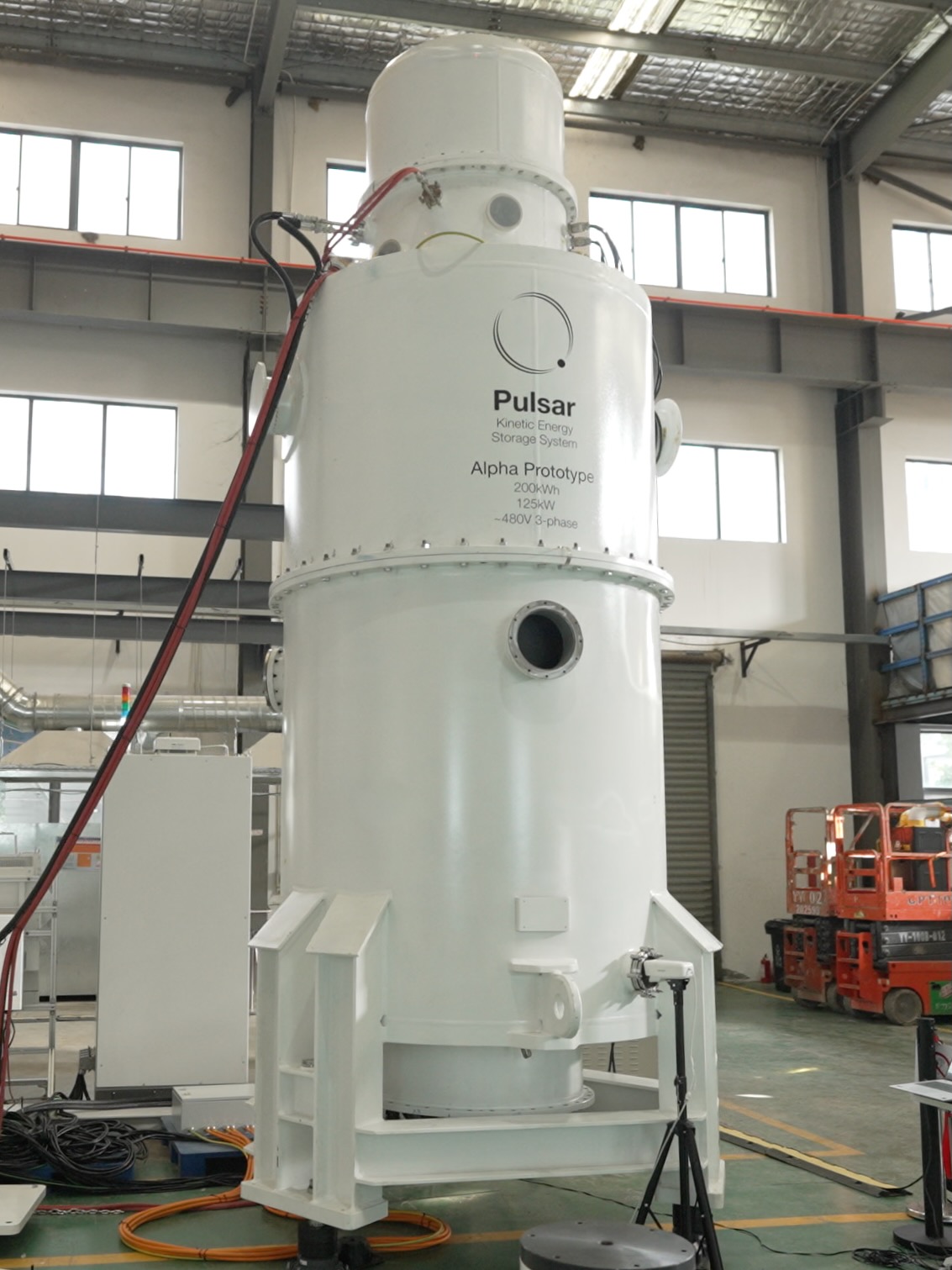
Sacramento-based Qnetic has begun low-speed testing of its flywheel energy storage system at its technology center in Shanghai, China. The prototype unit, dubbed Pulsar, represents a continuation of the company’s mechanical storage architecture that is expected to have an initial capacity of 200 kWh and expandable to 500 kWh with the same platform, which would enable four-hour storage at a nominal discharge rate of 125 kW.
Flywheels store energy in rapidly spinning rotors as kinetic motion. Surplus electricity is injected into the system, accelerating the rotor to high speeds. When power is needed, a generator converts kinetic energy back into electricity, slowing the rotor. Advocates for the technology say that flywheels could challenge battery-based energy storage systems (BESS) now dominant for renewables on the grid.
Qnetic reported in September that Pulsar had successfully completed its first 100 continuous charge-discharge cycles with zero faults or capacity degradation. Tested separately, the system’s motor produced 130 kW of power output at 97.3% efficiency with speeds exceeding 11,000 rpm.
Qnetic has established a factory and headquarters in Sacramento where it intends low-volume production of commercial Pulsar units. Pulsar will be evaluated in a pilot program by the Sacramento Municipal Utility District (SMUD) under the auspices of a risk-reduction initiative run by the Electric Power Research Institute. Qnetic aims to be able to start the pilot in the first half of 2027.
Michael Pratt, co-founder and CEO of Qnetic, told pv magazine USA that his company’s implementation of flywheel technology is intended to overcome many of the shortcomings of lithium-ion batteries, particularly in the areas of cycling rates and degradation over time.
Source link