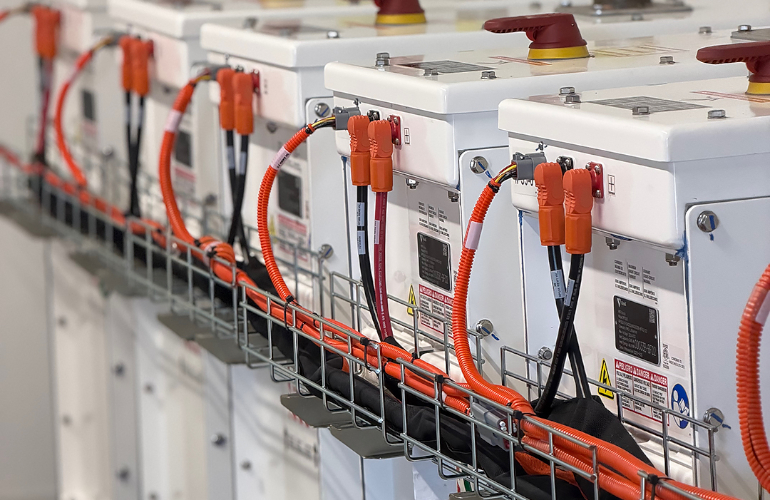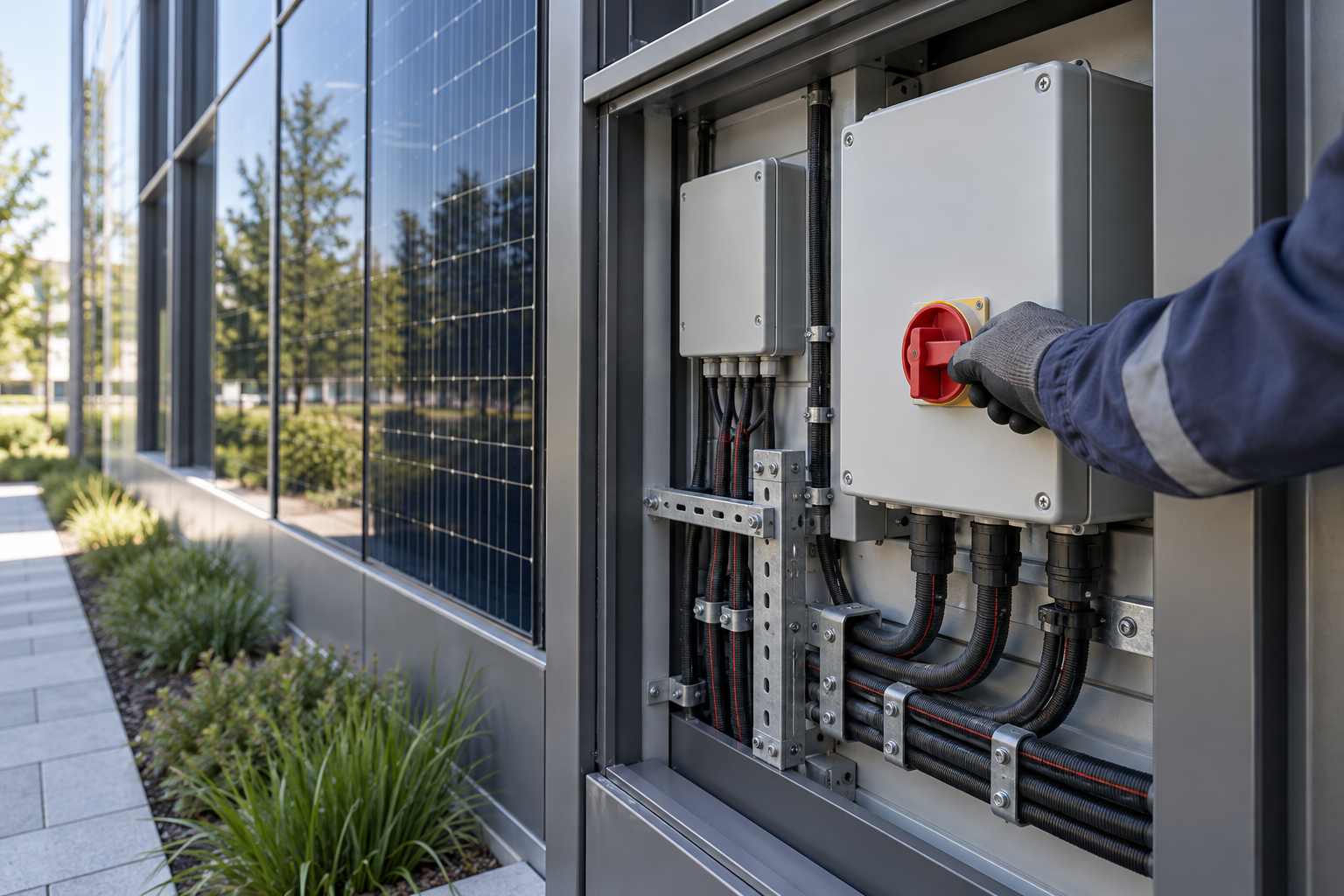
A research team led by the University of Science and Technology of China has developed a framework to assess the fire performance of building-integrated photovoltaic (BIPV) façades. The framework identifies key fire risk factors and prioritizes measures to prevent ignition and limit fire spread.
“Although previous studies have investigated the fire behavior of PV materials and modules, systematic fire risk assessment and resilience optimization for BIPV façades remain limited,” corresponding author Yu Wang told pv magazine. “In this work, data-driven sensitivity analysis and expert-judgment-based weighting methods were used to identify the dominant fire risk factors among 16 indicators covering electrical conditions, environmental factors, module materials, and installation conditions.”
Wang said the team also conducted a fire resilience optimization analysis based on the fire performance assessment to translate the most significant risk factors into practical mitigation measures.
“These measures cover ignition prevention, fire-spread suppression, monitoring, maintenance, and emergency response, extending the analysis from risk identification to engineering application,” he said.
The researchers began by establishing 16 fire risk indicators: temperature differences between shaded and unshaded areas; aging of PV modules and associated equipment; DC voltage and current levels; circuit contact resistance; wind load; dust accumulation; ambient temperature; natural disasters such as lightning; module glass thickness; glass type; encapsulation material fire performance; module light transmittance; installation spacing; installation configuration; installation angle; and shielding width.
Drawing on previous and ongoing experiments and published studies, the researchers used normalized variance contribution (NVC) analysis to assess variations in the indicators’ normalized risk scores. Nine experts from Asia and Europe, including university researchers, fire service leaders, fire investigators, and senior engineers, also evaluated the indicators using the analytic hierarchy process (AHP).
Source link